Luxa journal · manufacturing guide
Cosmetic Stability Testing: Plan Shelf Life Before Launch
A practical guide to cosmetic stability testing, shelf-life planning, preservation, microbiological quality and packaging compatibility for beauty brands.
In this guide
- 01What cosmetic stability testing actually measures
- 02Why shelf life must be product-specific
- 03Real-time, accelerated and stress testing
- 04Preservation and microbiological quality
- 05Formula and packaging compatibility
- 06Match the evidence to the target market
- 07Build testing into the launch timeline
- 08Questions to ask before testing begins
Cosmetic stability testing turns a promising formula into a product a beauty brand can evaluate over time. It examines whether the formula, preservation system and chosen packaging continue to behave as expected under defined conditions. For founders, ecommerce teams and retail buyers, the practical goal is not to collect scientific-sounding certificates. It is to build enough product-specific evidence to make better decisions about shelf life, packaging, production timing and market readiness.
Every product is shaped by its formula, claims, packaging, target market and sales channel. Use this guide to prepare a sharper manufacturing conversation, then confirm technical, legal and regulatory requirements for your specific launch.
At a glance
Guide essentials
Test scope
Formula, pack, storage and market
Core evidence
Real-time plus justified accelerated or stress work
Separate checks
Preservation and microbiological quality
Decision point
Review evidence before production
01
What cosmetic stability testing actually measures
From first sample to finished product
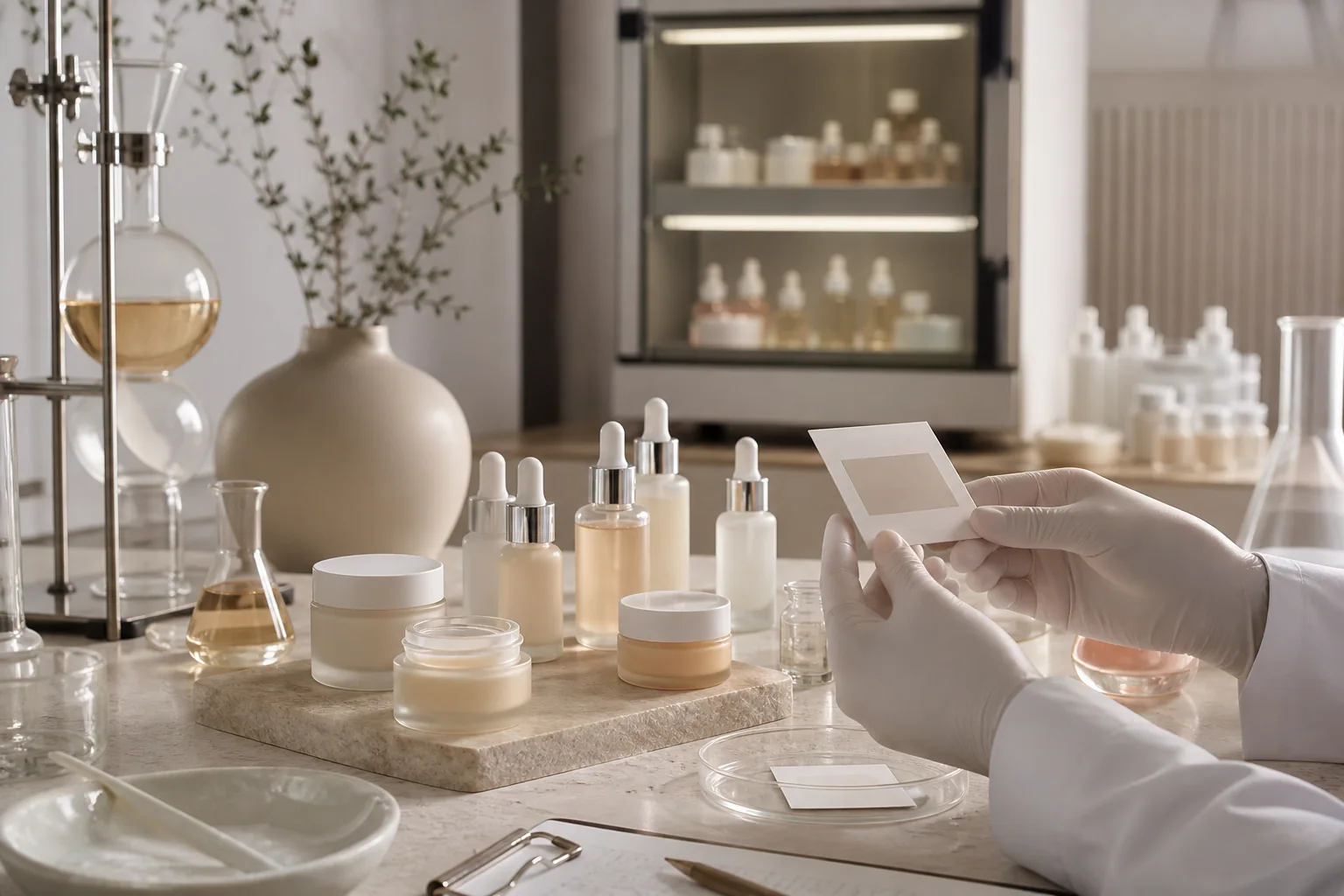
A cosmetic can look excellent on the day it is sampled and still change later. Colour may drift, fragrance can alter, an emulsion may separate, viscosity can rise or fall, and a packaging component may dispense differently after prolonged contact with the formula. Cosmetic stability testing follows defined samples over time so those changes can be observed, recorded and assessed against the agreed product specification.
The central question is not simply “Does the sample still look acceptable?” A useful stability programme asks whether the product remains physically and chemically suitable, whether its microbiological quality and preservation approach remain appropriate, and whether the pack continues to protect and deliver the formula in reasonably foreseeable storage and use conditions. The exact study design depends on the product, ingredients, water activity, packaging, intended market and claims.
Why product format changes the test plan
That distinction matters commercially. A lightweight serum in a dropper, a rich cream in a jar and a body wash in a pump do not have identical exposure or customer-use patterns. Stability planning therefore belongs inside the product brief, alongside the formula and packaging route, rather than being added as a generic final check.
- Physical appearance: colour, odour, texture, viscosity and visible separation.
- Formula behaviour: pH or other product-specific characteristics where relevant.
- Microbiological quality and the suitability of the preservation approach.
- Container interaction, dispensing performance, leakage and component condition.
- Changes under the defined time, temperature, light and handling conditions.
02
Why shelf life must be product-specific
Every formula and pack behaves differently
Shelf life generally describes the period during which a product can be expected to remain safe and perform as intended when it is stored and used as directed. It is tempting to borrow a familiar number from another serum or cream, but the comparison can be misleading. Two products in the same category may use different emulsifiers, antioxidants, preservatives, botanical inputs, fragrance systems, fill processes or containers. Each difference can change the product’s stability profile.
The U.S. Food and Drug Administration explains in its guidance on cosmetic shelf life and expiration dating that exposure to air, sunlight, moisture and temperature can change colour and texture, while emulsions may separate and preservation systems can deteriorate. The FDA also makes an important distinction: U.S. law does not prescribe one shelf life for cosmetics, but manufacturers remain responsible for product safety and for determining an appropriate shelf life.
Questions to ask before choosing an expiry date
That responsibility should change the conversation with a manufacturer. Instead of asking only, “What expiry date can we print?”, ask what formula and pack are being assessed, which conditions are included, what characteristics will be monitored, how results will be reviewed and what evidence supports the proposed shelf-life position. A responsible answer may include open points, especially when the final formula, component or market has not yet been confirmed.
03
Real-time, accelerated and stress testing
Three approaches with different roles
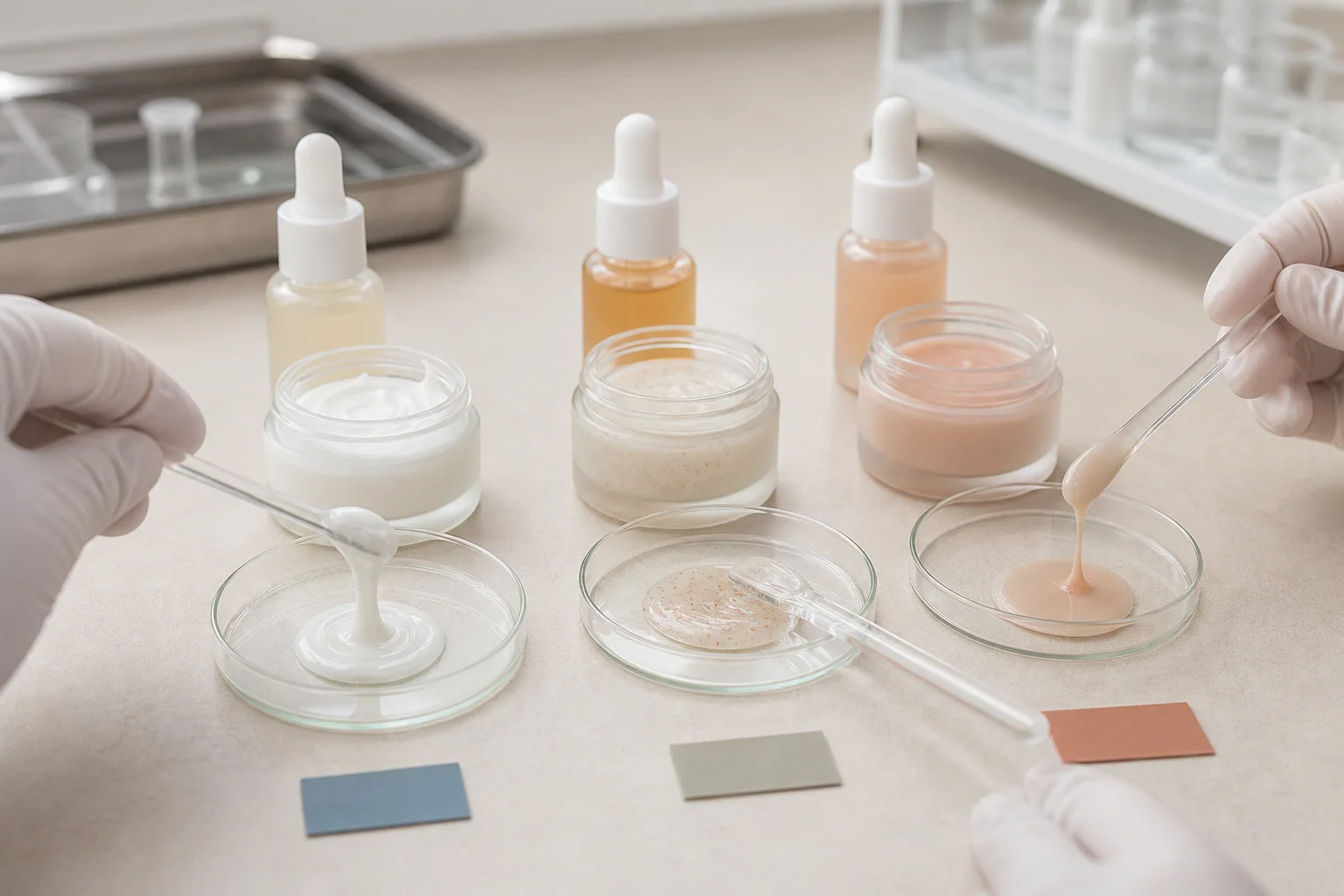
Real-time stability work observes the product under defined normal or recommended storage conditions. It is the most direct view of how the selected formula and pack behave as time passes, but it naturally takes time. Accelerated studies use elevated or varied conditions to surface potential changes sooner. Stress approaches may include high and low temperatures, temperature cycling, light exposure or freeze-thaw cycles where these are appropriate to the product.
Accelerated data can support development and help identify weaknesses. A short test does not automatically prove a long shelf life. The relevance of any condition and the meaning of a change depend on the formula, packaging and scientific rationale. A result that matters for an emulsion may not carry the same meaning for an anhydrous balm.
Set decision points before testing begins
Brands should agree decision points before the study begins. Which changes would trigger investigation? What range is acceptable for appearance, odour, viscosity or pH where measured? Will a pack failure pause formula work, or will an alternative component be assessed? The skincare sampling process is a useful place to organise these approvals, because the stability sample must correspond to an identifiable formula and packaging version.
| Approach | What it helps assess | Important limitation |
|---|---|---|
| Real-time | Behaviour under defined normal or recommended storage conditions. | It requires calendar time and should continue for the planned review period. |
| Accelerated | Potential physical or chemical changes under selected elevated or varied conditions. | A short accelerated study does not automatically prove a fixed shelf life. |
| Stress | Specific vulnerabilities under relevant extremes, cycles, light or handling conditions. | Each condition needs a product-specific purpose and scientific rationale. |
04
Preservation and microbiological quality
Why a stable appearance is not enough
Physical stability and microbiological quality are connected, but they are not interchangeable. A cream can look unchanged while its preservation system is unsuitable for the formula or its expected use. Water-containing products, jar formats, reusable applicators and products exposed to wet environments can present different contamination considerations. Raw materials, manufacturing conditions, packaging and consumer handling all affect the risk picture.
The FDA’s overview of microbiological safety and cosmetics identifies several routes by which contamination can occur, including contaminated ingredients or water, poor manufacturing conditions, ineffective preservation, inadequate packaging, storage and consumer use. This is why “contains a preservative” is not a complete safety argument. The finished formula and its use conditions need to be considered.
Challenge testing versus routine microbial testing
Preservative efficacy testing, sometimes described as challenge testing, examines how the preservation system performs under a defined method. Routine microbiological testing addresses a different question: the microbiological quality of materials or finished product at the point tested. The suitable methods, acceptance criteria and timing should be determined by qualified technical professionals for the actual product and market.
The FDA also notes in its product testing guidance for cosmetics that it does not publish a universal list of tests required for every cosmetic. Manufacturers and distributors are responsible for ensuring safety, using available evidence and additional scientifically sound testing where needed. Brands should therefore ask for the testing rationale, not a generic package of tests presented as universally sufficient.
05
Formula and packaging compatibility
Treat the pack as part of the product
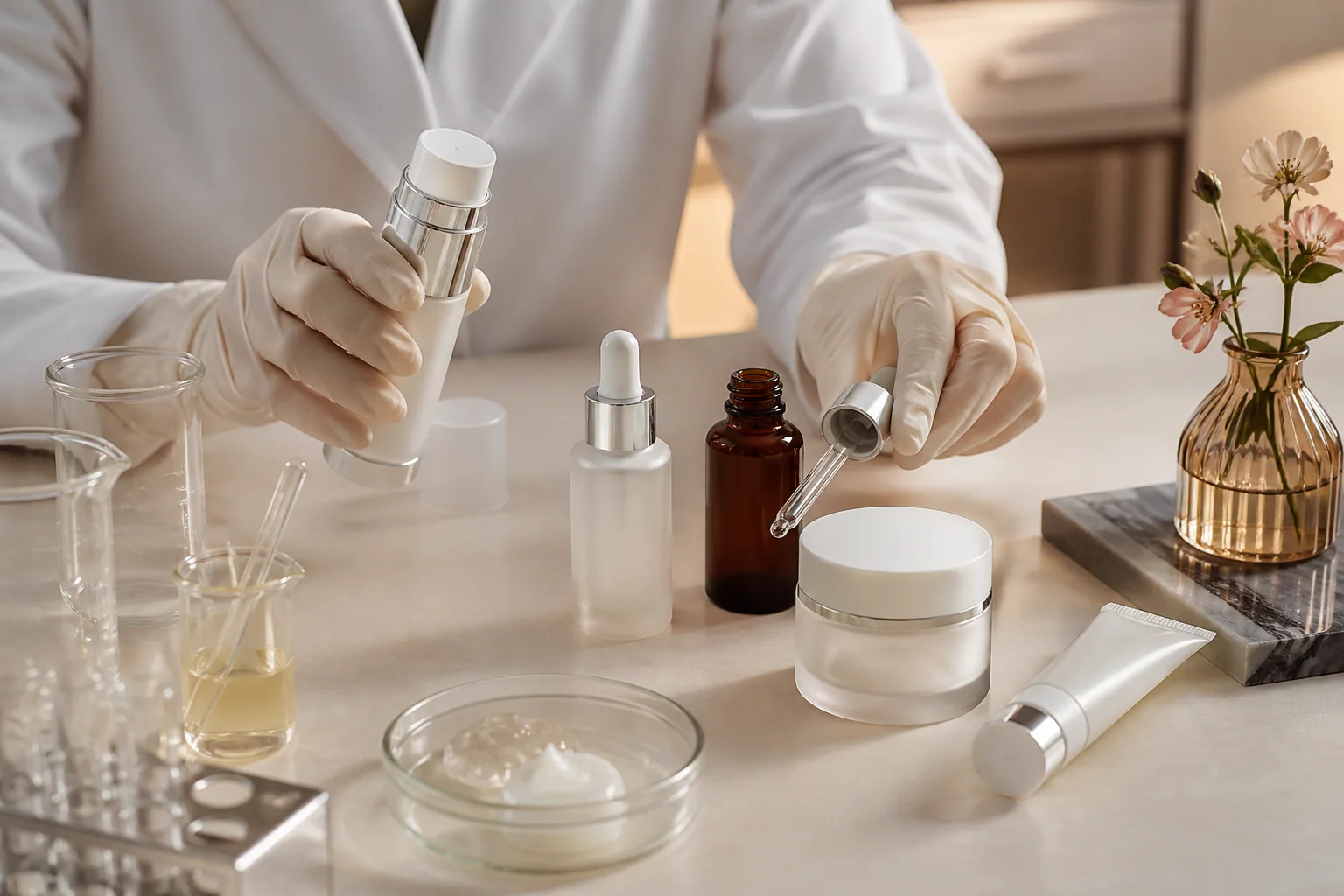
Packaging is part of the stability system. The formula remains in contact with the bottle, jar, tube, pump, gasket, liner and closure for months, not minutes. That contact can affect component appearance, dispensing, leakage, evaporation, product protection and customer experience. A beautiful pack that is unsuitable for the formula is not a finished product solution.
What compatibility review should observe
Compatibility review should use the intended formula and the intended primary pack wherever possible. Observe whether the pump continues to prime and deliver an appropriate dose, whether a dropper bulb or seal changes, whether a tube panel or print finish is affected, and whether the closure remains secure. Transport and handling considerations may require separate evaluation; a stability study does not automatically prove shipping performance.
This is also where late creative changes become expensive. Changing from a dropper to an airless pump, adding a custom coating, revising the fill size or switching component material can create a new formula-pack combination that needs review. LUXA’s OEM skincare route treats component feasibility and sample approval as part of the product standard, which is particularly important when a brand brings a benchmark it wants to protect.
06
Match the evidence to the target market
Plan with the destination market visible
Stability work should be planned with the destination market visible. The same underlying product-development evidence may need to support different safety documentation, label decisions or responsible-party reviews. A manufacturer can contribute formula, production, packaging and available test information, but that does not replace the brand’s regulatory responsibilities or qualified market-specific assessment.
European Union and United States considerations
For the European Union, Annex I of the official EU Cosmetics Regulation specifies that the Cosmetic Product Safety Report includes the physical and chemical characteristics and stability of the cosmetic product under reasonably foreseeable storage conditions, as well as microbiological quality. This is a useful example of why stability evidence needs to connect to a defined product and safety file rather than sit as an isolated marketing claim.
For the United States, a cosmetic is not automatically subject to the drug stability rules that apply to products regulated as drugs. However, claims can change product classification. A product marketed to treat disease or affect the structure or function of the body may be regulated differently. Final claims, labels, testing and market access should therefore be reviewed together with qualified advisers before production is released.
Connect testing with compliance planning
Stability evidence should be reviewed as part of the product’s wider quality and compliance planning. LUXA can provide relevant manufacturing information and project records, while the brand and its regulatory advisers confirm final claims, labels, notifications and responsible-party arrangements for each market.
07
Build testing into the launch timeline
Late changes create late testing
Stability planning has consequences for the launch calendar. If the final component arrives late, the relevant formula-pack review also starts late. If a sample changes after testing begins, the team needs to decide whether the change is material and what work should be repeated or extended. If artwork promises a benefit that requires different substantiation, a technically stable formula may still not be commercially ready.
Use review gates to protect the launch
A practical timeline begins with a locked-enough product definition: formula version, fill size, primary pack, intended use, storage direction, target market and claims territory. It then identifies which studies can begin at the development stage, which require production-representative samples and which continue after the commercial decision. The goal is not to wait for every possible future data point before making any decision; it is to make each decision with the limitations and follow-up work visible.
Build review gates into the critical path. The first gate confirms the test plan and samples. Later gates review observations, deviations and any pack issues. A pre-production gate confirms what evidence is available, what remains ongoing and whether qualified technical and regulatory reviewers accept the proposed route. This gives commercial teams a more honest launch plan than treating testing as a hidden laboratory task.
- Confirm the exact formula version and intended primary packaging.
- Document target markets, storage instructions and proposed claims.
- Agree conditions, checkpoints, characteristics and acceptance ranges.
- Record deviations, component changes and required follow-up work.
- Align the evidence review with artwork and bulk-production release.
08
Questions to ask before testing begins
Define the sample and study
A strong testing conversation is specific enough to expose what is still unknown. Ask which sample version will be tested, whether the final packaging is included, what conditions and checkpoints are proposed, which physical and microbiological characteristics are being assessed, and how the findings will be documented. Ask whether any result depends on a separate laboratory, regulatory assessor or component supplier.
Plan for formula and packaging changes
Also ask what happens if the product changes. Will a fragrance adjustment, preservative change, colour addition or new pump require a fresh assessment? Who decides whether bridging evidence is appropriate? What information will be available for the brand’s safety assessor or responsible person? These questions help distinguish a managed product-development process from a shelf-life number supplied without context.
Connect testing to the commercial brief
Finally, keep the commercial brief in view. Share the product category, target market, packaging direction, expected quantity and launch window. LUXA can use those inputs to organise a manufacturing and testing discussion around the actual product scope. When you are ready, send the project details to the LUXA team and identify any test, documentation or timing assumptions that need to be clarified before quotation.
Make the next step useful
Bring the right details to your first product conversation.
Share your product category, target market, packaging direction, expected quantity and timing. Luxa can help turn those inputs into a more practical development route.
Discuss your product brief