Luxa journal · manufacturing guide
Best Packaging for Vitamin C Serum: Airless Pumps, Opaque Packs and Droppers
Compare airless pumps, opaque bottles and droppers for vitamin C serum, with stability, oxygen, light, compatibility and customer-use questions for brands.
In this guide
- 01Start with the form of vitamin C
- 02Airless pumps reduce repeated exposure
- 03Droppers offer theatre with trade-offs
- 04Opaque pumps and tubes can be practical
- 05Run stability and compatibility as one programme
- 06Turn the pack decision into a product brief
- 07Write a technical packaging specification before sourcing
- 08Build a stability and compatibility protocol with acceptance criteria
- 09Control filling, headspace and component assembly
- 10Choose the pack through evidence, brand fit and total cost
Vitamin C serum packaging is not a decoration decision made after the formula is finished. Ascorbic acid can be sensitive to light, oxygen, heat, metal ions and pH, while derivatives and alternative delivery systems have their own behaviour. The best pack is the one validated with the exact formula, dose, use pattern and distribution conditions.
Every product is shaped by its formula, claims, packaging, target market and sales channel. Use this guide to prepare a sharper manufacturing conversation, then confirm technical, legal and regulatory requirements for your specific launch.
At a glance
Vitamin C packaging essentials
Start with
Vitamin C form and formula sensitivity
Compare
Exposure, dose, evacuation and user contact
Validate
The filled, decorated commercial component
Control
Formula, pack and supplier changes together
01
Start with the form of vitamin C
Identify the vitamin C system
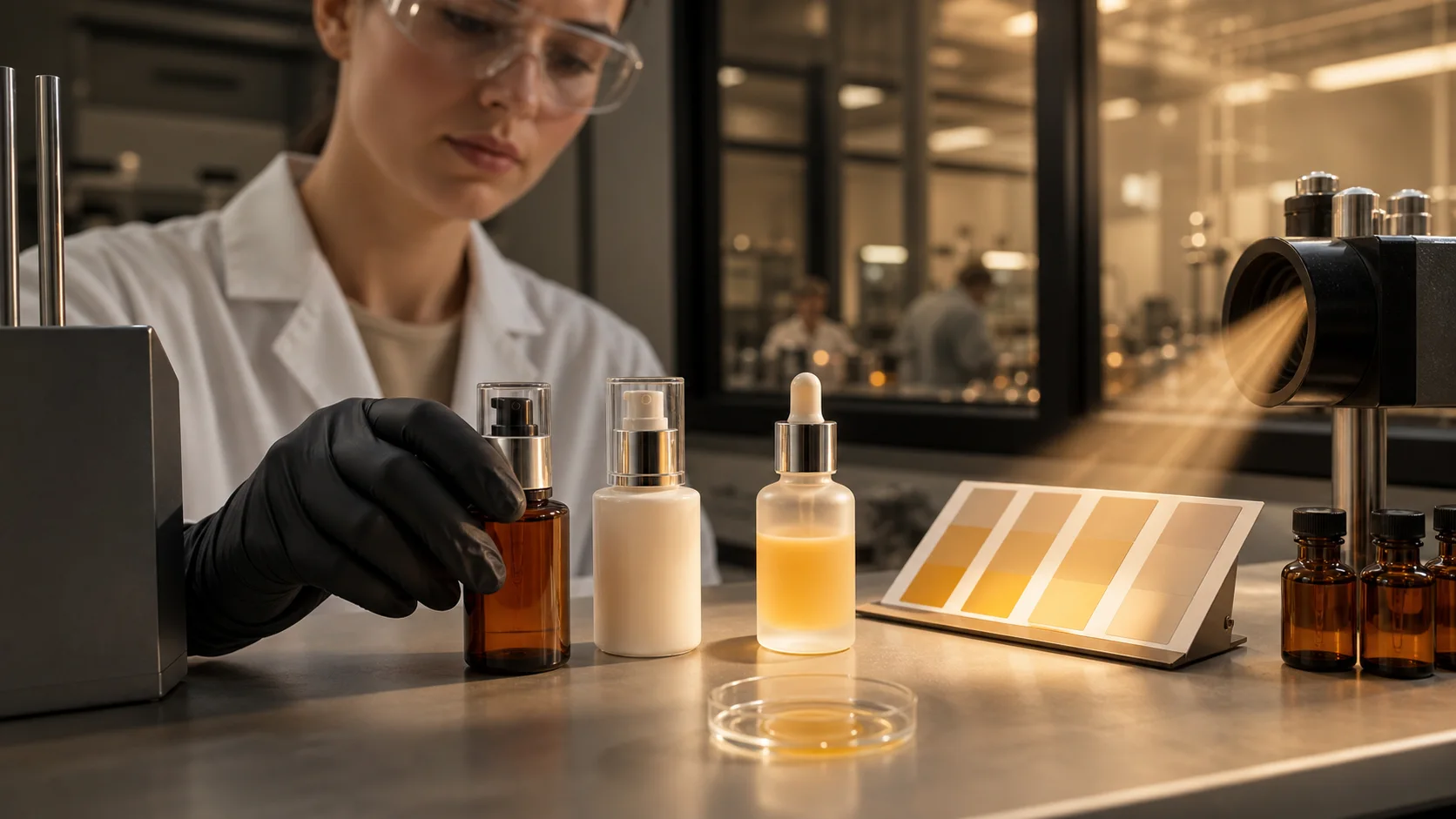
“Vitamin C serum” can describe formulas based on L-ascorbic acid, a vitamin C derivative or a delivery system intended to improve stability or skin availability. Research reviews identify stability as a central challenge for ascorbic acid, particularly under light, heat and oxygen exposure.
Translate formula risks into a pack brief
The ingredient form, concentration, water phase, pH, supporting antioxidants and process all influence packaging. Do not select an amber dropper or airless pump from category convention alone. Ask what the formula is sensitive to and which pack variables the stability protocol must challenge.
02
Airless pumps reduce repeated exposure
Understand the airless advantage
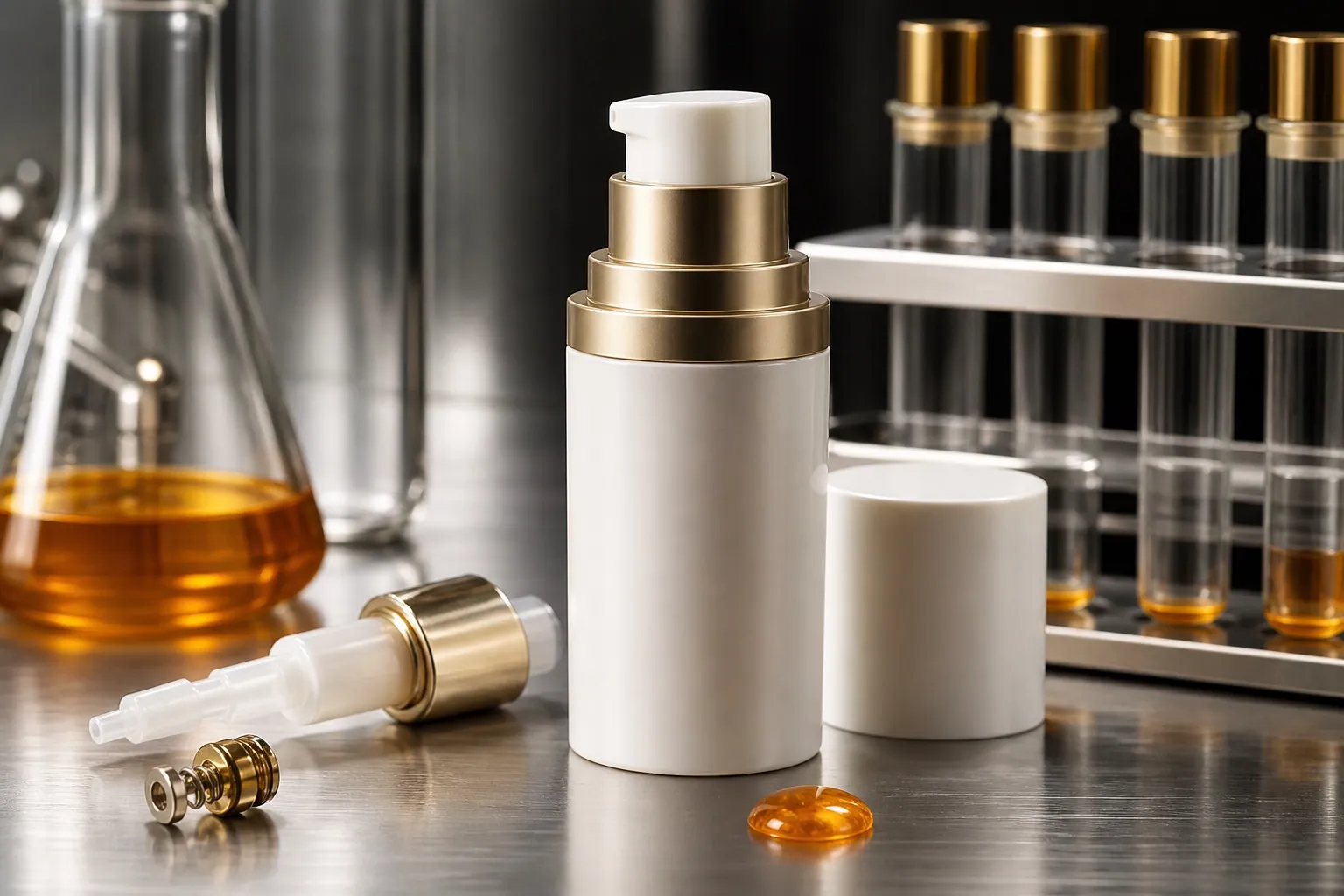
An airless pump can limit outside air drawn back into the pack and gives a controlled dose without opening the reservoir. Opaque or UV-protective materials can also reduce light exposure. This makes an airless route a strong candidate when the formula and component are compatible.
Test mechanism performance rather than assuming it
Airless is not a guarantee. Pump priming, residual product, dose consistency, actuator force, piston behaviour and viscosity must be checked. The component also needs transport and drop testing. A premium mechanism that misfires is worse than a simpler pack that performs consistently.
03
Droppers offer theatre with trade-offs
Balance application theatre with exposure
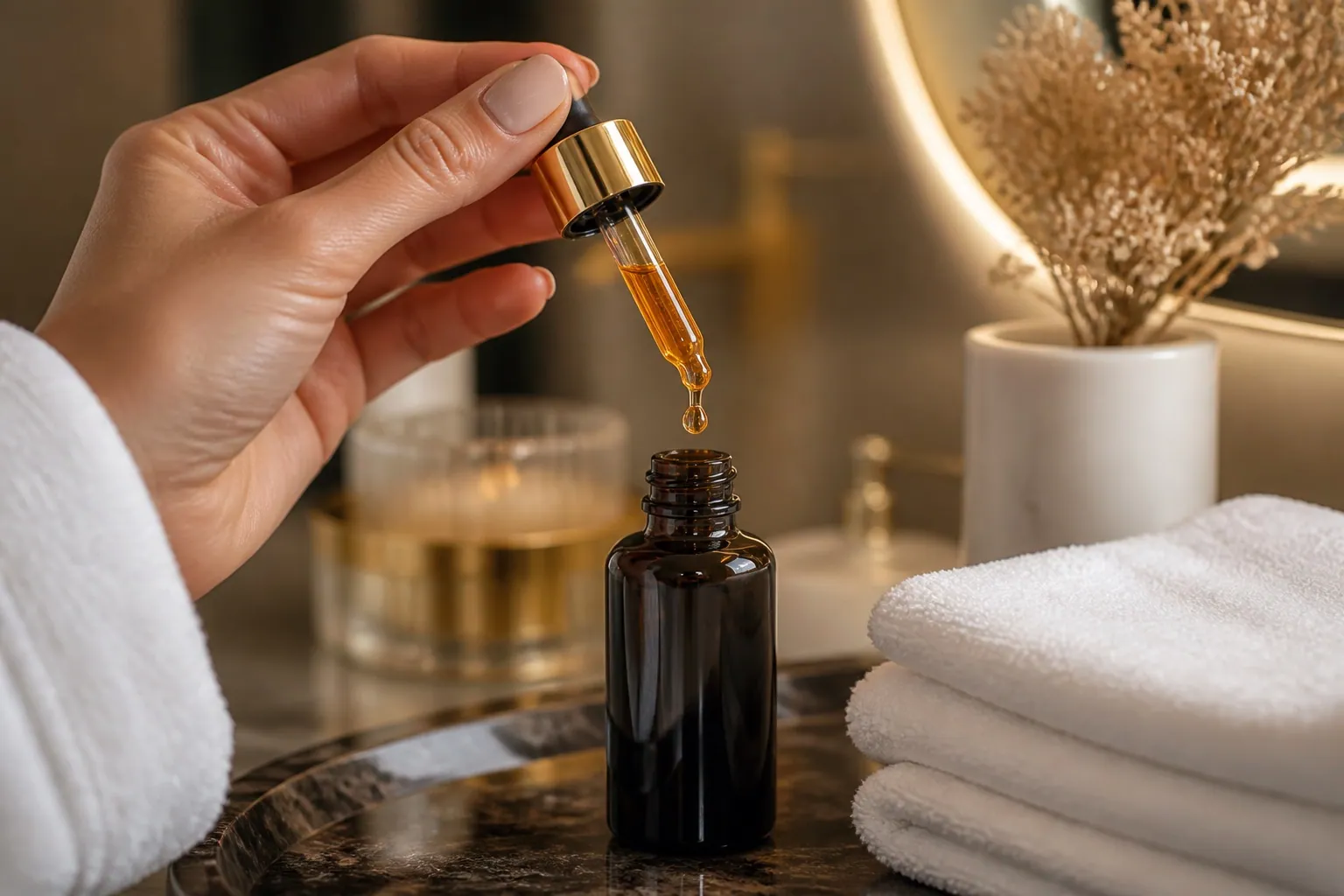
A dropper makes colour and texture visible and gives creators an immediate application gesture. It can also expose the formula to air and light each time the bottle is opened. The pipette may touch fingers or skin, and a low-viscosity serum can collect around the neck.
Evaluate every dropper component
Amber or coated glass may improve light protection, but the finished system still needs evidence. Review bulb, wiper, pipette material, fill level, torque, leakage and dose. If colour changes during normal life, define an acceptable specification rather than relying on a dark bottle to hide instability.

04
Opaque pumps and tubes can be practical
Consider opaque pumps and barrier tubes
An opaque pump bottle or barrier tube may provide a simpler combination of light protection, controlled dispensing and ecommerce durability. It can suit a creamier serum or a project where glass weight and breakage are commercial concerns.
Compensate for reduced product visibility
Customers cannot see remaining product or formula colour, so clear instructions, reliable evacuation and a trustworthy fill experience become more important. Decoration inks, liners and contact materials should be assessed with the formula rather than approved from an empty component sample.
| Pack route | Potential advantage | What must be validated |
|---|---|---|
| Opaque airless pump | Reduced repeated opening, controlled dose and light protection. | Priming, evacuation, oxygen ingress, compatibility and actuator reliability. |
| Dark glass dropper | Visible ritual, familiar premium cue and flexible dosing. | Light protection, headspace exposure, pipette contact, leakage and dose. |
| Opaque conventional pump | Simple use, ecommerce durability and broad component choice. | Dip-tube evacuation, headspace, closure, dose and formula contact. |
| Barrier tube | Light protection, portability and lower breakage risk. | Layer compatibility, panel recovery, closure seal and residual product. |
05
Run stability and compatibility as one programme
Connect chemical stability and pack performance
A serum can remain chemically acceptable while the pack leaks, discolours, swells or delivers an inconsistent dose. It can also look perfect while the active degrades. The test plan should connect appropriate chemical measures with appearance, odour, pH, viscosity, microbial quality, package integrity and dispensing performance.
Keep the approved combination under change control
Include light exposure, elevated and low temperature, cycling, transport and repeated consumer use. Keep the approved formula, component, decoration and closure version under change control. A new pump colour or supplier is not automatically the same package.

06
Turn the pack decision into a product brief
Compare components with the same finished formula
For a private label vitamin C serum, define the customer, texture, fill size, vitamin C direction, claim boundary, retail channel, shipping conditions, dose and visual character. Compare viable components with the same formula rather than choosing from renderings.
Choose the development route after risks are defined
Luxa’s packaging development page can organise component, decoration and carton decisions. If the formula is driven by a benchmark, an OEM skincare route may fit; if the concept needs deeper development, consider ODM skincare. Final selection should follow compatibility and stability evidence.
- Vitamin C form and formula sensitivity
- Light, oxygen and temperature exposure
- Dose, viscosity and evacuation performance
- Contact-material and decoration compatibility
- Leakage, transport and repeated-use testing
- Approved pack version and change-control record
07
Write a technical packaging specification before sourcing
Translate formula sensitivity into requirements
Begin with the formula profile: vitamin C form, concentration, pH, viscosity, water phase, colour, odour and known sensitivity to oxygen, light, heat or metal contact. Add the target fill, dose, channel, distribution climate and expected period after opening. This turns “premium vitamin C bottle” into a component brief suppliers can assess.
Specify contact materials and performance
Define material and performance requirements without over-specifying appearance too early. Consider product-contact plastics, glass, elastomers, springs, gaskets, liners and coatings. Ask suppliers for drawings, material declarations, pump output, tolerance and quality information. A gold finish or heavy bottle does not answer whether the product-contact system is appropriate.
Define a reliable customer dose
Set usability criteria. Decide the number of actuations to prime, target dose range, acceptable residual product, force, closure torque and whether one-handed application matters. For droppers, define pipette length, bulb recovery, wiper behaviour and dose repeatability. These details shape customer trust and the amount used per application.
Include carton and shipper protection
Keep secondary packaging inside the specification. Cartons, inserts and protective shippers can add light protection and reduce breakage. They also influence cost, assembly and disposal language. Review the complete retail and ecommerce presentation instead of treating the primary bottle as the entire packaging system.
Confirm how the chosen component will be sourced again. Record the supplier, mould or reference, colour standard, decoration process, approved sample and acceptable alternatives. Vitamin C projects are particularly vulnerable to casual pack substitution because a visually similar pump or dropper can introduce different contact materials, tolerances or exposure. Reorder documentation should preserve the exact validated system.
- Formula identity, pH, viscosity and sensitivity.
- Contact materials, closure and mechanism specification.
- Target dose, priming and evacuation criteria.
- Distribution climate and ecommerce route.
- Carton, insert, decoration and shipper version.
08
Build a stability and compatibility protocol with acceptance criteria
Test formula and pack as one system
Use the intended formula and commercial pack wherever possible. Include appropriate real-time, accelerated and stress conditions selected by qualified technical teams. Observe formula colour, odour, pH, viscosity and relevant chemical measures alongside leakage, swelling, corrosion, delamination, print change, closure integrity and dispensing performance.
Agree what pass and investigate mean
Define acceptance criteria before results arrive. A colour scale, assay range, pump-output tolerance or leakage standard gives the team a basis for decisions. “Looks acceptable” is difficult to reproduce across reviewers and time. Criteria should reflect safety, performance, consumer expectations and the evidence used to support the proposed shelf life.
Simulate repeated consumer use
Add repeated-use samples. Open droppers, operate pumps and store components as customers will. Compare full and partially used packs because headspace and repeated exposure change over time. Include handling with product on fingers, residue around the neck and foreseeable storage in warm bathrooms or bright vanities where relevant.
Diagnose change rather than hiding it
Investigate changes instead of allowing the pack to hide them. An opaque bottle may conceal colour movement, but opacity does not stop degradation automatically. If the formula changes, determine whether the cause relates to formula, process, headspace, light, temperature or component interaction before selecting a darker colour as the solution.
09
Control filling, headspace and component assembly
Include the filling process in pack validation
Packaging performance depends on how the product is filled and assembled. Review bulk hold time, filling temperature, exposure to air, target fill volume, headspace and line speed. A component tested carefully in development can behave differently if the production process introduces excess aeration or inconsistent closure torque.
Check performance during the run
Set in-process checks for fill weight or volume, closure, pump prime, dose and leakage. Inspect components across the run rather than only at the beginning. For airless systems, piston position and filling method can influence evacuation. For droppers, fill level, wiper and pipette clearance affect use and appearance.
Preserve component identity and cleanliness
Protect components before filling. Dust, scratches, mixed lots and decoration damage can create visible or functional defects. Maintain supplier lot identity and inspection records. If a replacement component or second source is proposed, compare drawings and materials, then reopen the compatibility and performance checks affected by the change.
Validate the filled distribution system
Use transport testing on filled sale units and final shippers. Temperature, vibration, pressure and drops can loosen closures or create leakage that does not appear at rest. Inspect both formula and decoration afterward. Ecommerce customers judge the first opened parcel, so clean presentation is part of the package acceptance criteria.
10
Choose the pack through evidence, brand fit and total cost
Score technical and brand criteria together
Compare viable components in a decision table covering formula protection, dispensing, customer ritual, breakage, decoration, MOQ, unit cost, assembly, freight and recyclability claims. Weight the factors according to the actual launch. A visually dramatic dropper may suit content, while an airless or opaque pump may better support dose and routine simplicity.
Calculate the cost of the finished system
Model total cost rather than the empty-component price. Include cap or closure, decoration, carton, insert, assembly, inspection, leakage allowance, freight and replacement risk. A heavier glass pack can raise shipping and damage costs; a complex airless component can add lead time. Commercial suitability belongs beside technical compatibility.
Teach customers to use and store the pack
Write directions and product photography around the selected system. Show a normal dose, explain priming if necessary and state storage guidance supported by the product. Avoid encouraging customers to open an airless bottle or store a dropper in direct light merely because the visual content looks appealing.
Review field performance before repeating the order
Before reorder, review pump complaints, leakage, oxidation indicators, dose, returns and residual-product feedback. Confirm whether the formula, component supplier, decoration or distribution route changed. When evidence supports the final route, share the formula direction, pack candidates, market, quantity and testing scope with LUXA to plan the commercial version.
- Protection and stability evidence.
- Dose, evacuation and customer handling.
- MOQ, lead time and finished-system cost.
- Transport, breakage and leakage performance.
- Complaint and change review before reorder.
Make the next step useful
Bring the right details to your first product conversation.
Share your product category, target market, packaging direction, expected quantity and timing. Luxa can help turn those inputs into a more practical development route.
Discuss your product brief