Luxa journal · manufacturing guide
Body Serum vs Body Lotion: Formulation and Range-Planning Guide
Compare body serum and body lotion by texture, product role, layering, packaging and claims before developing a coordinated body-care range.
In this guide
- 01Separate format from function
- 02Give each product a different moment
- 03Design the layering test before the claim
- 04Use packaging to signal the difference
- 05Build the line around one customer tension
- 06Brief the pair as one commercial system
- 07Build distinct formula briefs for serum and lotion
- 08Run a paired consumer-use and compatibility programme
- 09Plan pack size, set architecture and replenishment
- 10Launch the body-care line around a clear routine promise
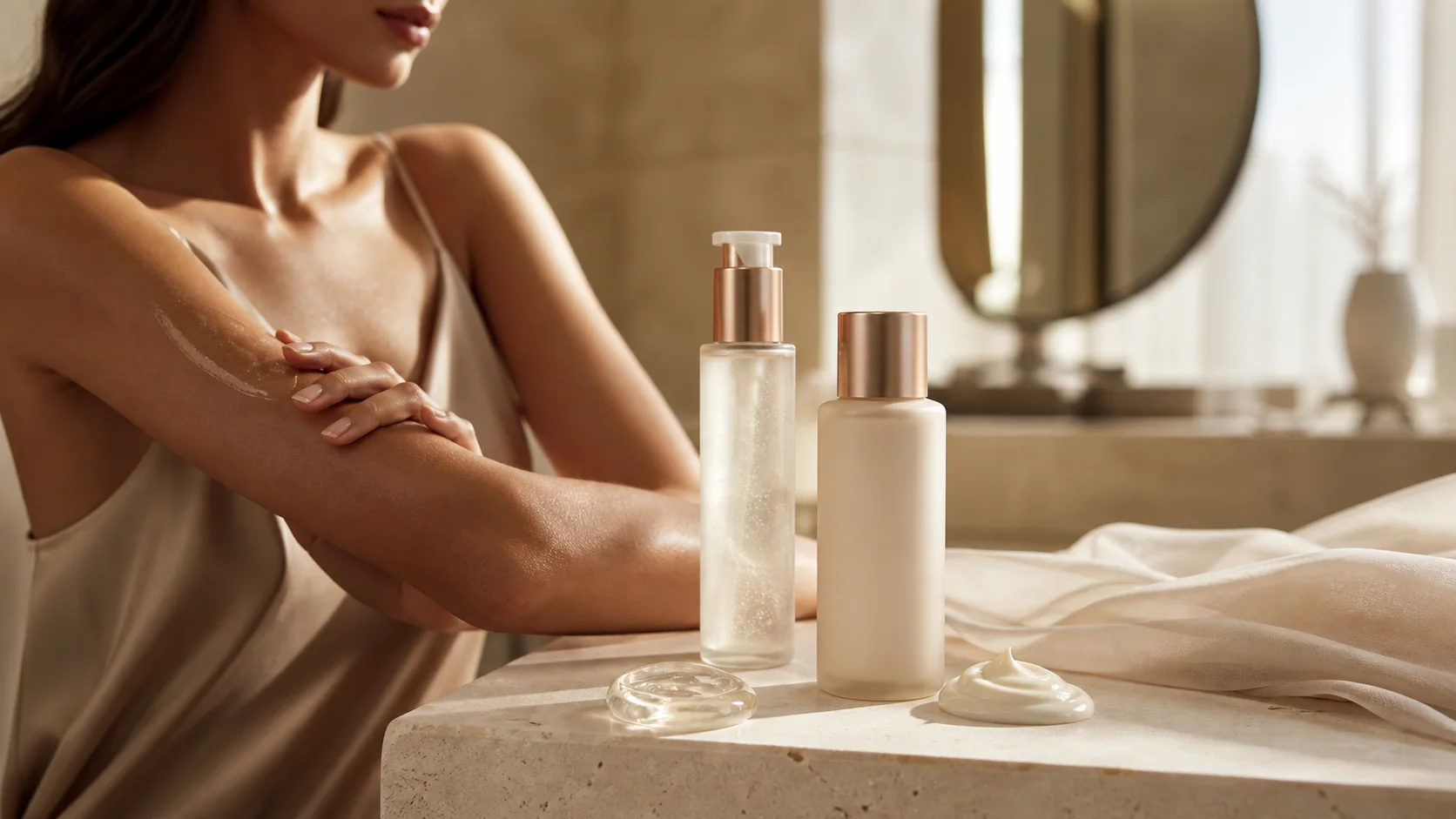
Body serum and body lotion are often placed beside each other without a clear difference beyond texture. For a brand, that creates unnecessary duplication. A useful pair should solve two distinct routine jobs, layer without pilling or excessive tack and make sense as a set as well as individual products. The formulation brief begins by defining those jobs.
Every product is shaped by its formula, claims, packaging, target market and sales channel. Use this guide to prepare a sharper manufacturing conversation, then confirm technical, legal and regulatory requirements for your specific launch.
At a glance
Body-care range essentials
Serum role
Lighter, focused or layerable treatment step
Lotion role
Broader moisturising and comfort step
Test together
Dose, absorption, tack and pilling
Plan commercially
Pack size, use rate and replenishment
01
Separate format from function
Use format names as customer signals
Body serum usually signals a lighter, faster-spreading treatment step. Body lotion usually signals broader moisturising, comfort and everyday coverage. These are market conventions, not fixed scientific categories. Either format can contain humectants, emollients and occlusive ingredients.
Design the humectant-emollient-occlusive balance
Research on moisturiser design describes humectants as ingredients that help attract and retain water, occlusives as materials that reduce water loss and emollients as ingredients that improve softness and surface feel. A finished product often combines these roles. The brief should decide the balance and sensorial result, not force an ingredient into a fashionable label.
| Decision | Body serum | Body lotion |
|---|---|---|
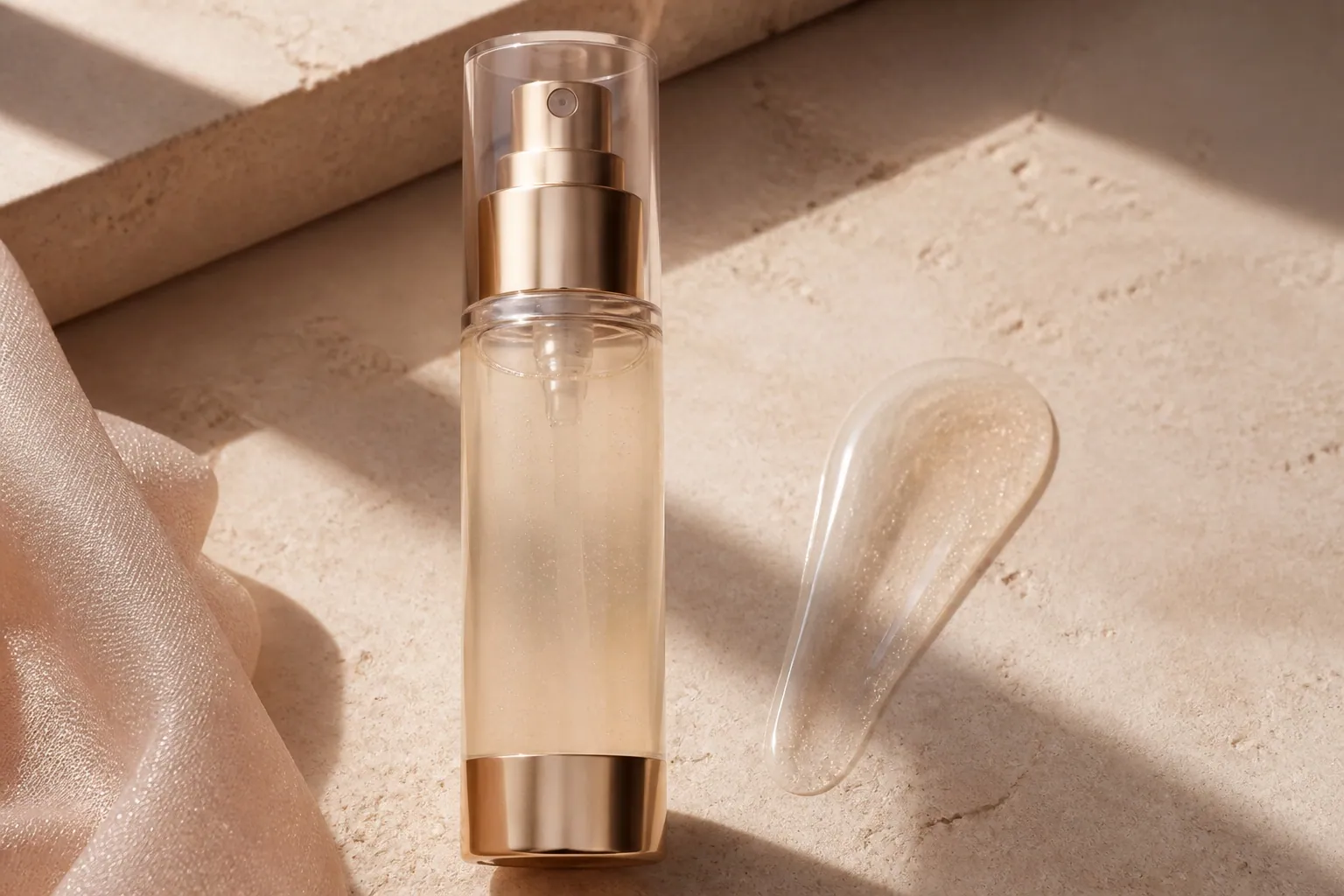
| Texture direction | Lighter, quicker-spreading and more treatment-coded. | Creamier, more cushioning and broad-coverage coded. |
| Typical dose | Controlled or targeted application. | More generous all-over application. |
| Packaging cue | Slim controlled pump or treatment dispenser. | Larger pump, tube or squeeze bottle. |
| Range role | Focused first layer or occasion product. | Daily moisturising anchor and replenishment driver. |
02
Give each product a different moment
Create different usage occasions
A serum can be positioned for targeted application, warm-weather use or a quick treatment layer. A lotion can provide the more substantial all-over step. If both have the same viscosity, finish, fragrance and instruction, the customer has little reason to own both.
Connect available LUXA formats to distinct roles
Luxa’s exfoliating body serum offers one treatment-led direction. The AHA body lotion and brightening body lotion represent different lotion territories. Any exfoliation or brightening language requires finished-formula and market-specific review.
03
Design the layering test before the claim
Define the order and realistic dose
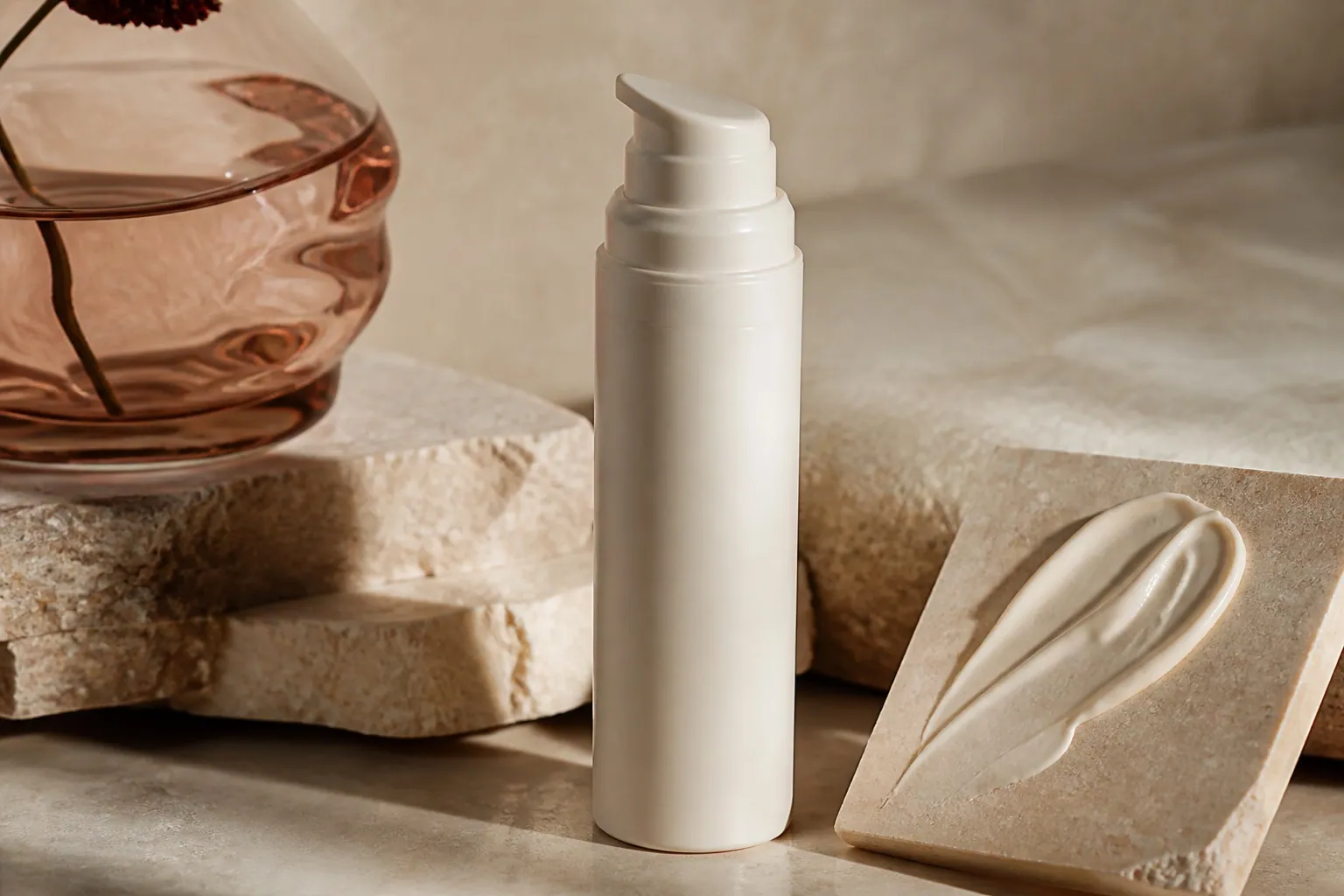
If the products are meant to layer, decide the order and test them together. Review spread, absorption time, tack, pilling, fragrance build and clothing transfer at realistic doses. A pair can work individually and still become unpleasant when combined.
Give layering a customer benefit
Layering should offer a benefit beyond selling two units. The serum might deliver a lighter first step while the lotion supplies a more comfortable finish. Alternatively, make the products seasonal or occasion-based rather than simultaneous. Clear routine logic is more credible than declaring that every customer needs both every day.

04
Use packaging to signal the difference
Use dose and pack size to communicate function
A slim pump or controlled dispenser can give the serum precision. A larger pump or squeeze bottle can communicate generous daily use for the lotion. Component selection also needs to match viscosity, dose, formula compatibility and expected use rate.
Coordinate the range without making it indistinguishable
The two packs should belong to one brand without becoming indistinguishable. Coordinate shape, colour or decoration, then preserve functional cues such as pump output, label hierarchy and fill size. Review the system through the packaging development process before artwork is final.
05
Build the line around one customer tension
Choose one body-care tension
A coherent body-care line might focus on dry-feeling skin, uneven-looking texture, a sensorial evening ritual or a lightweight warm-climate routine. Keep the language cosmetic and avoid turning a general body product into an implied treatment for a medical condition.
Keep every routine step purposeful
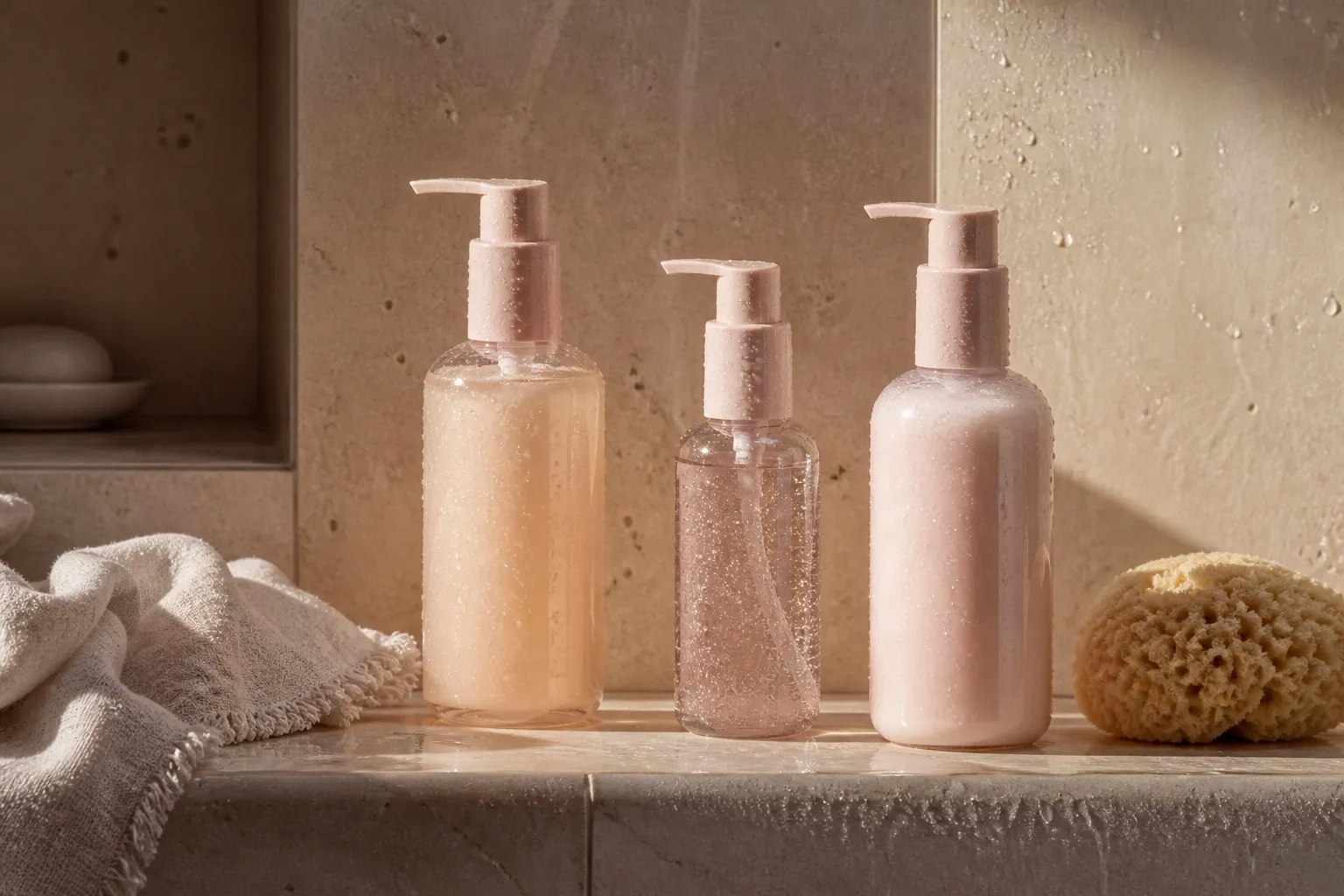
A body wash can prepare the routine, a serum can add the focused moment and a lotion can finish it. Three purposeful steps are stronger than six products separated only by ingredient names.
06
Brief the pair as one commercial system
Sample and cost the pair as a system
Share the customer, climate, channel, price position, fragrance stance, routine order, texture contrast, pack sizes and expected monthly use. Ask for paired samples and record feedback at individual and layered levels. Model how quickly each product will be finished so a set does not create awkward replenishment.
Match the development route to the brief
A private label skincare set can create a faster collection route, while OEM or ODM may suit a specific sensorial benchmark. Connect formula, component, claim, quantity and reorder economics in one plan.
- Distinct job for serum and lotion
- Defined application order and dose
- Layering, tack and pilling assessment
- Coordinated but functionally different packaging
- Claims reviewed for the target market
- Set price and individual replenishment route
07
Build distinct formula briefs for serum and lotion
Write separate sensory specifications
Write two separate sensory specifications before discussing hero ingredients. For the serum, define spread, slip, absorption, tack, residue and whether it should layer under another product. For the lotion, define cushion, massage time, finish, comfort and the area covered by one dose. These criteria give the formulator a clearer target than “light” and “rich.”
Use ingredient functions to create contrast
Map ingredient functions to the intended experience. Humectants can support hydration, emollients influence softness and glide, and more occlusive materials can reduce water loss and increase richness. The final balance matters more than assigning one ingredient family to each format. A serum can feel heavy and a lotion can feel light depending on the complete formula.
Avoid overlapping active stories
Decide whether either product carries an exfoliating, brightening or other focused cosmetic direction. Active-led positioning can change pH, irritation considerations, directions and claim substantiation. Avoid creating two active products that compete for the same routine moment or make combined use unnecessarily complex.
Approve the individual products and the pair
Approve the products individually and as a pair. Record formula codes, fragrance level, colour, pump output and use dose. If a change improves one item but harms layering, treat it as a range-level decision. The customer experiences the finished routine, not the internal sequence in which each formula was developed.
Include climate and season in the specification. The same emollient system can feel elegant in a dry winter and overly persistent in a humid summer. If the range is intended for international sale, decide whether one balanced texture can serve the priority markets or whether the launch needs a clearer climate position. This is a commercial choice as well as a formulation choice because it affects sampling, inventory, content and the number of SKUs the brand must support.
- Spread, absorption and finish target for each format.
- Normal dose and body area covered.
- Fragrance and active compatibility when layered.
- Formula and component versions under review.
- Individual and paired acceptance criteria.
08
Run a paired consumer-use and compatibility programme
Test the routine in realistic conditions
A bench comparison should be followed by realistic use. Ask participants to apply the intended dose in the planned order on dry and slightly damp skin where relevant. Record spread, absorption time, tack, pilling, clothing transfer and fragrance build. Include warm and humid conditions if the range targets climates where a rich routine may feel uncomfortable.
Validate the intended layering interval
Test timing. Immediate layering may behave differently from waiting one or five minutes. If customers must follow a precise interval to avoid pilling, decide whether that instruction is acceptable for the proposition. A routine designed for speed should work at the pace shown in content and described on the pack.
Connect pump output with use experience
Review packaging compatibility with the final viscosities. Pump output, priming, evacuation and residue around the actuator affect dose and perception. A serum that dispenses too much can erase the intended lightness, while a lotion pump that delivers too little makes whole-body use frustrating and changes the expected use rate.
Turn feedback into controlled changes
Collect feedback with controlled questions and an open-comment field. Rank issues by severity and frequency, then connect each requested change to formula, component, direction or positioning. Avoid averaging away a serious pilling or irritation report simply because the overall fragrance score is high.
09
Plan pack size, set architecture and replenishment
Let realistic use rate set fill size
Use rate should drive fill size. A targeted serum may last longer than an all-over lotion even in a smaller bottle. Estimate doses per use, uses per week and area covered, then test the estimate with consumers. A set feels poorly designed when one item empties long before the other and replacements are not available individually.
Choose how the pair enters the market
Decide whether the pair launches as a discovery set, full-size routine or independent products. A discovery set can reduce trial friction but adds secondary packaging and assembly. A full-size duo can raise order value while increasing inventory exposure. Individual sale supports replenishment and reveals which product earns demand without the bundle.
Coordinate visually and differentiate functionally
Coordinate components where it improves recognition, but preserve functional differences. Related colours, materials and typography can unify the family. Distinct silhouettes, sizes or labels can communicate treatment versus moisturising. Confirm that customers can identify the correct step in the shower, bedroom or low-light setting where the products may be used.
Plan inventory by SKU and by set
Model component MOQ and reorder timing separately for each SKU. The lotion may sell faster, use a larger component and consume more warehouse space. The serum may have a longer formula or pump lead time. A range-level plan should show how one delayed item affects sets, individual orders and promotional commitments.
10
Launch the body-care line around a clear routine promise
Own one coherent routine promise
Choose a promise that the complete range can support: lightweight warm-weather layering, an evening comfort ritual, smoother-looking texture or a focused-plus-daily pairing. Keep the language within cosmetic boundaries and connect every claim to the finished product and target market. Ingredient popularity does not substitute for substantiation.
Demonstrate normal use and optionality
Build content around normal application. Show the serum dose, spread and absorption, then the lotion finish. Explain whether customers can use either item alone. Honest demonstrations help shoppers understand texture and reduce the expectation that more steps automatically create better results.
Create a customer-feedback loop
Train customer service to distinguish routine questions from adverse reactions or complaints requiring escalation. Provide directions, fragrance information, compatibility guidance and the current formula version. Patterns in pilling, pump failure, scent strength or finish should flow back to product and packaging review.
Reorder from range-level evidence
Before reordering, compare individual sales, set attachment, repeat interval, return reasons and remaining stock. Adjust pack size, bundle mix or education before simply repeating the first run. When ready, share the paired brief, target customer, textures, pack sizes, quantity and market with LUXA so the next production plan reflects actual use.
- One customer tension across the range.
- Distinct serum and lotion directions.
- Finished-product claim substantiation.
- Individual and set sales tracking.
- Complaint and replenishment review before reorder.
Make the next step useful
Bring the right details to your first product conversation.
Share your product category, target market, packaging direction, expected quantity and timing. Luxa can help turn those inputs into a more practical development route.
Discuss your product brief