Luxa journal · manufacturing guide
Waterless Skincare Products: Formulation, Packaging and Launch Planning
Explore waterless skincare products, from cleansing bars and balms to powders and concentrates, with formulation, packaging and claims questions for beauty brands.
In this guide
- 01Define what waterless means for this product
- 02Match the format to a real routine
- 03Low water does not mean no preservation work
- 04Packaging is part of the ritual
- 05Treat sustainability language as a claim
- 06Sample in real use conditions
- 07Design the formula architecture around use conditions
- 08Control moisture during manufacturing and filling
- 09Engineer packaging for humidity, dose and portability
- 10Build an evidence-led waterless launch plan
Waterless skincare has become a visual shorthand for concentration and lower-impact packaging. Yet the term covers very different products: cleansing bars, balm sticks, oils, powders, solid serums and formulas that simply use less water. Removing water from the ingredient list does not automatically remove preservation, packaging or environmental questions. A strong product brief begins with the customer experience and the total system, not the headline.
Every product is shaped by its formula, claims, packaging, target market and sales channel. Use this guide to prepare a sharper manufacturing conversation, then confirm technical, legal and regulatory requirements for your specific launch.
At a glance
Waterless-development essentials
Define first
The exact low-water format and use case
Validate with
Water activity, stability and real-use evidence
Protect through
Humidity-aware packaging and instructions
Claim only
What the full product system supports
01
Define what waterless means for this product
Distinguish the formula architectures
An anhydrous balm, a dry powder and a solid cleansing bar may all be described as waterless, but they behave differently. A powder encounters water in the customer’s hand. A shower bar lives in humidity. A balm can pick up contamination through repeated contact. Each format needs its own stability, compatibility and usage plan.
Name the commercial purpose of waterless
Decide whether the proposition is concentration, portability, reduced primary packaging, a new ritual or lower formulation water. If environmental impact is central, assess ingredients, processing, cleaning, shipping, consumer use and end-of-life rather than assuming that a low-water formula proves a lower total water footprint.
02
Match the format to a real routine
Choose a format with a routine advantage
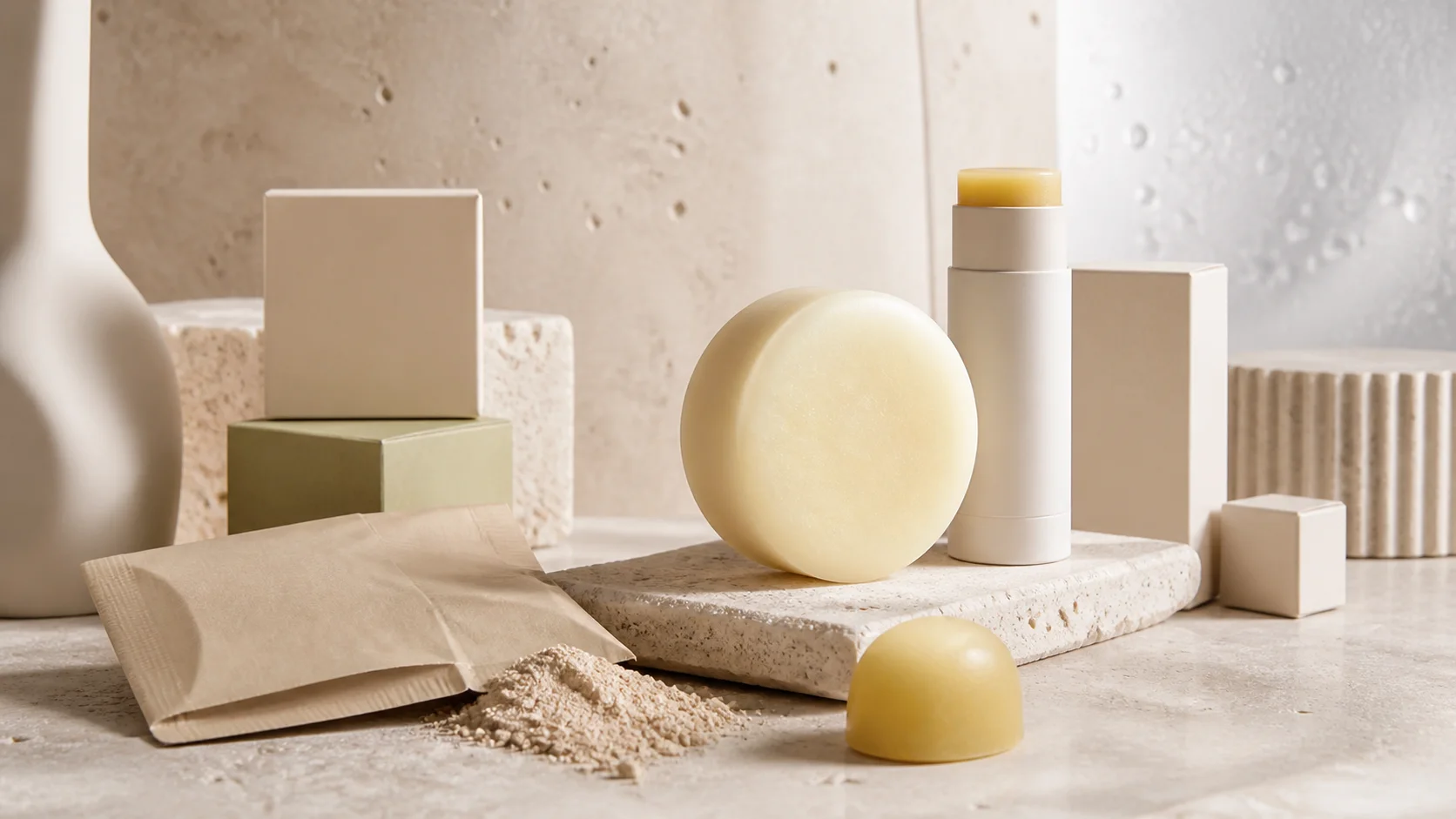
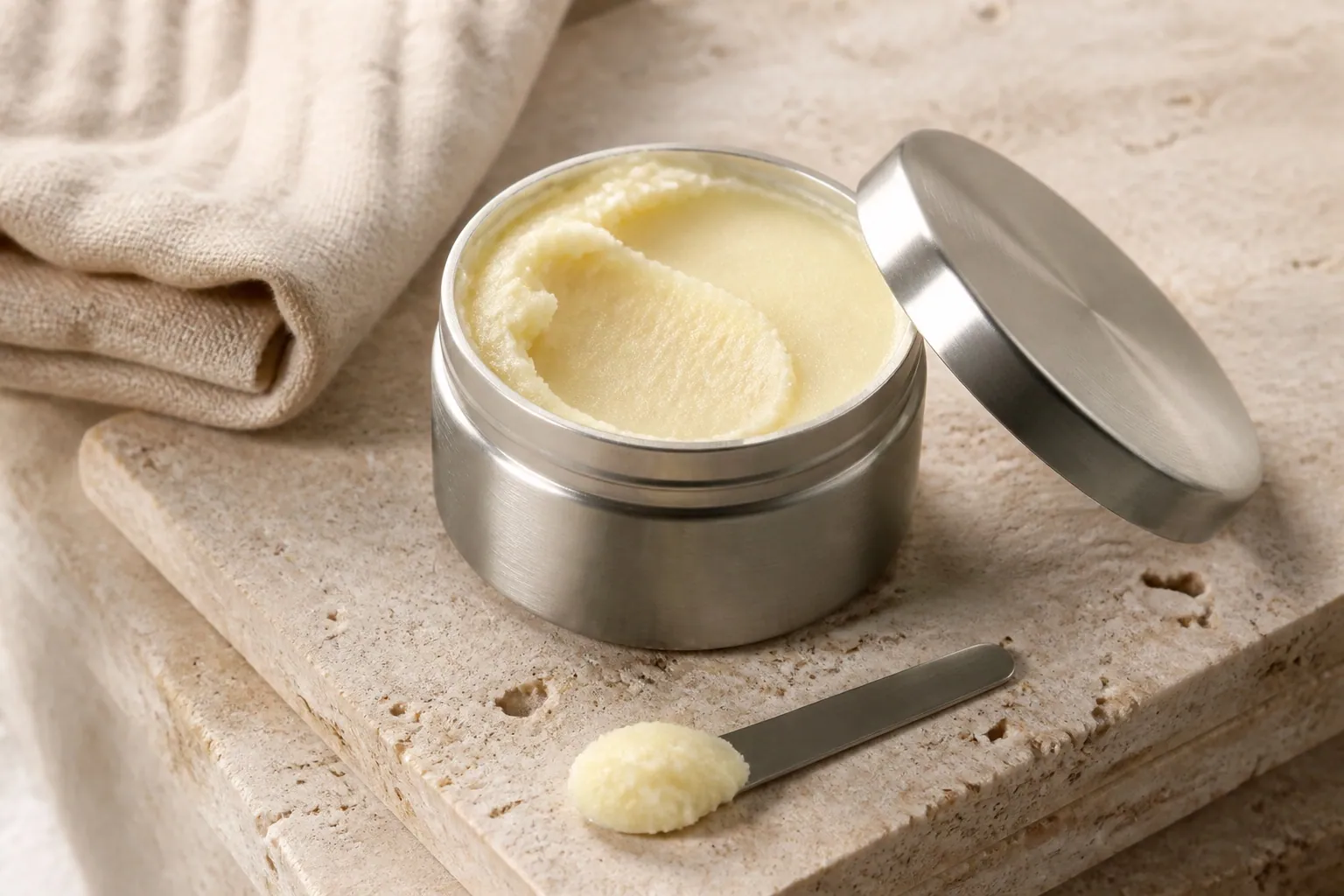
A solid format earns its place when it makes the routine easier or more distinctive. Cleansing bars offer a compact rinse-off step. Balm sticks allow controlled application. Powders activate at use, while oils and balms can reduce bulk. The trade-off is education: customers must understand dose, storage, activation and expected texture.
Use product references as starting points
Luxa supports solid formats that can anchor a brief, including a botanical cleansing bar, turmeric and honey soap and kojic charcoal soap. These are development starting points, not evidence that every formula suits every skin type or claim.
| Format | Customer advantage | Development priority |
|---|---|---|
| Cleansing bar | Compact rinse-off step with reduced bottle use. | Hardness, lather, wet-dry behaviour and drainage. |
| Balm or stick | Controlled application and portable ritual. | Heat resistance, glide, pay-off and component advance. |
| Powder cleanser | Dose activated at use and low shipping weight. | Moisture barrier, dust control, dose and activation instructions. |
| Oil or anhydrous serum | Concentrated sensorial application. | Oxidation, ingredient solubility, pack compatibility and dose. |
03
Low water does not mean no preservation work
Understand available water and contamination
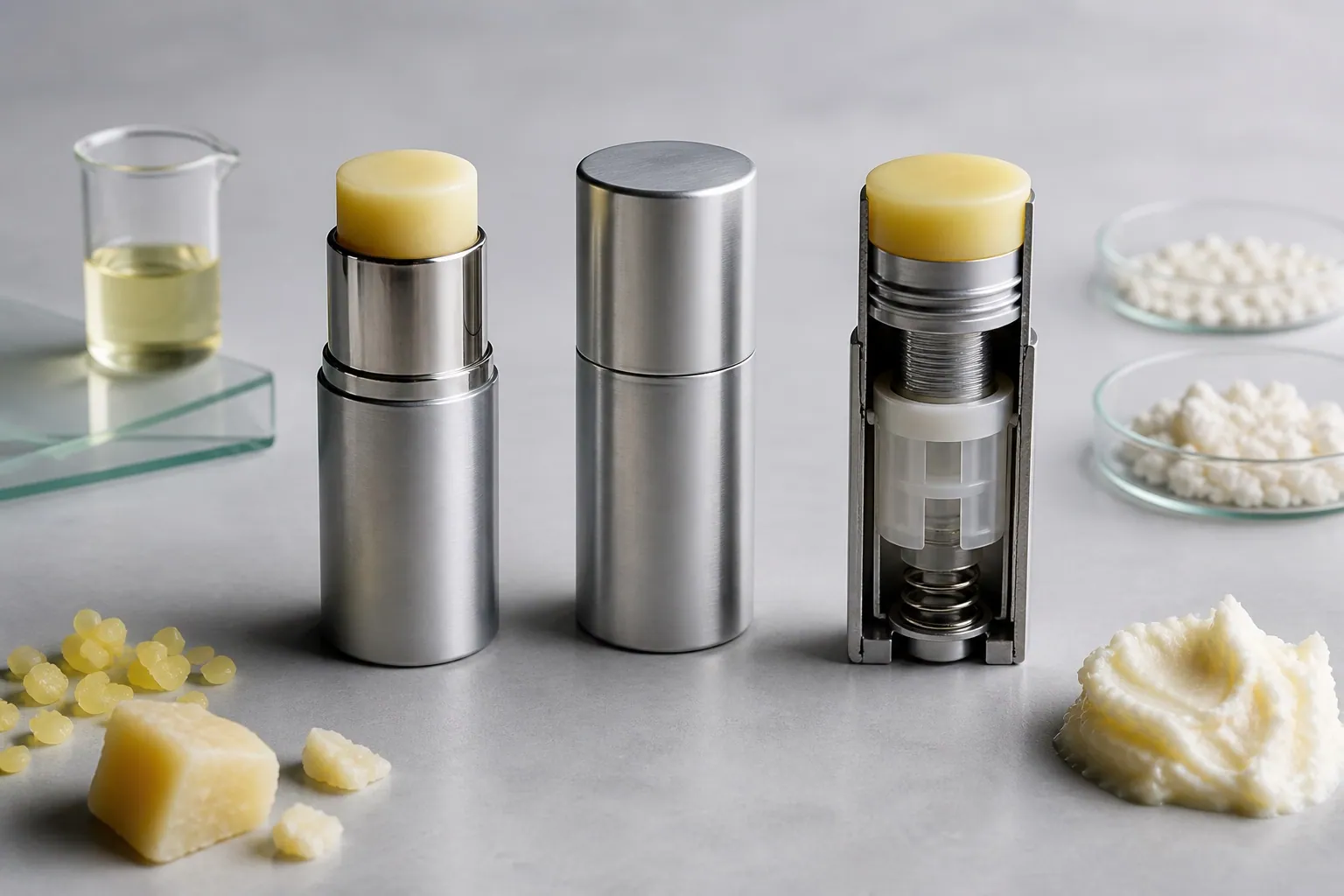
Microbial growth depends partly on available water, not only total water content. Research on cosmetic preservation describes water activity, pH, packaging design and manufacturing controls as interacting hurdles. A low-water product may reduce one route of growth while remaining vulnerable through ingredients, processing or use.
Set a product-specific preservation strategy
The preservation strategy should be confirmed for the final formula and pack. Challenge testing, stability work and microbiological specifications depend on the product and market. Avoid turning “preservative-free” into a design target before safety and product architecture are understood.
04
Packaging is part of the ritual
Protect the product through real use
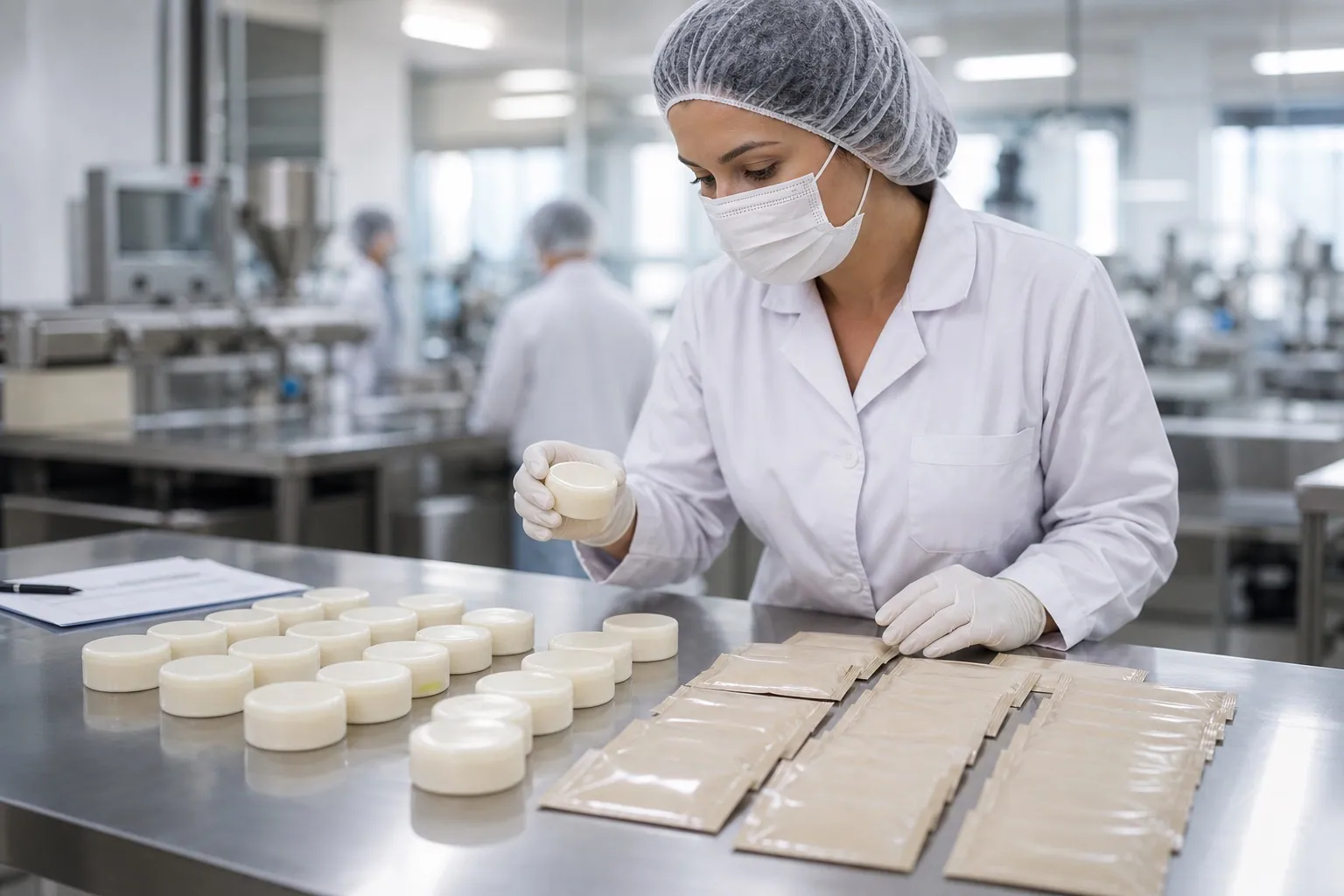
A paper carton can look minimal but may not protect a product through humidity, transport and repeated use. A shower bar needs drainage. A powder sachet needs moisture protection. A balm stick needs component compatibility and reliable advance. The right pack protects the formula and makes correct use intuitive.
Review the complete packaging system
Use the skincare packaging development page to organise the conversation. Review primary contact material, closure, decoration, secondary pack, shipper and real-life storage together. If a refill or reduced-plastic claim is planned, document the actual configuration and disposal route for the target market.
05
Treat sustainability language as a claim
Treat environmental language as evidence-led
“Waterless,” “zero waste,” “plastic free” and “eco-friendly” can shape purchase decisions, so they deserve evidence discipline. A product can contain no added water and still require water for raw materials, factory cleaning or rinsing. A recyclable component may not be accepted by every local collection system.
Prefer precise, bounded statements
Write the claim only after the life-cycle boundary is clear. Precise language such as concentrated format, paper outer carton or refillable component can be easier to substantiate. Keep the manufacturing fact separate from the brand’s broader environmental conclusion.
06
Sample in real use conditions
Simulate the customer environment
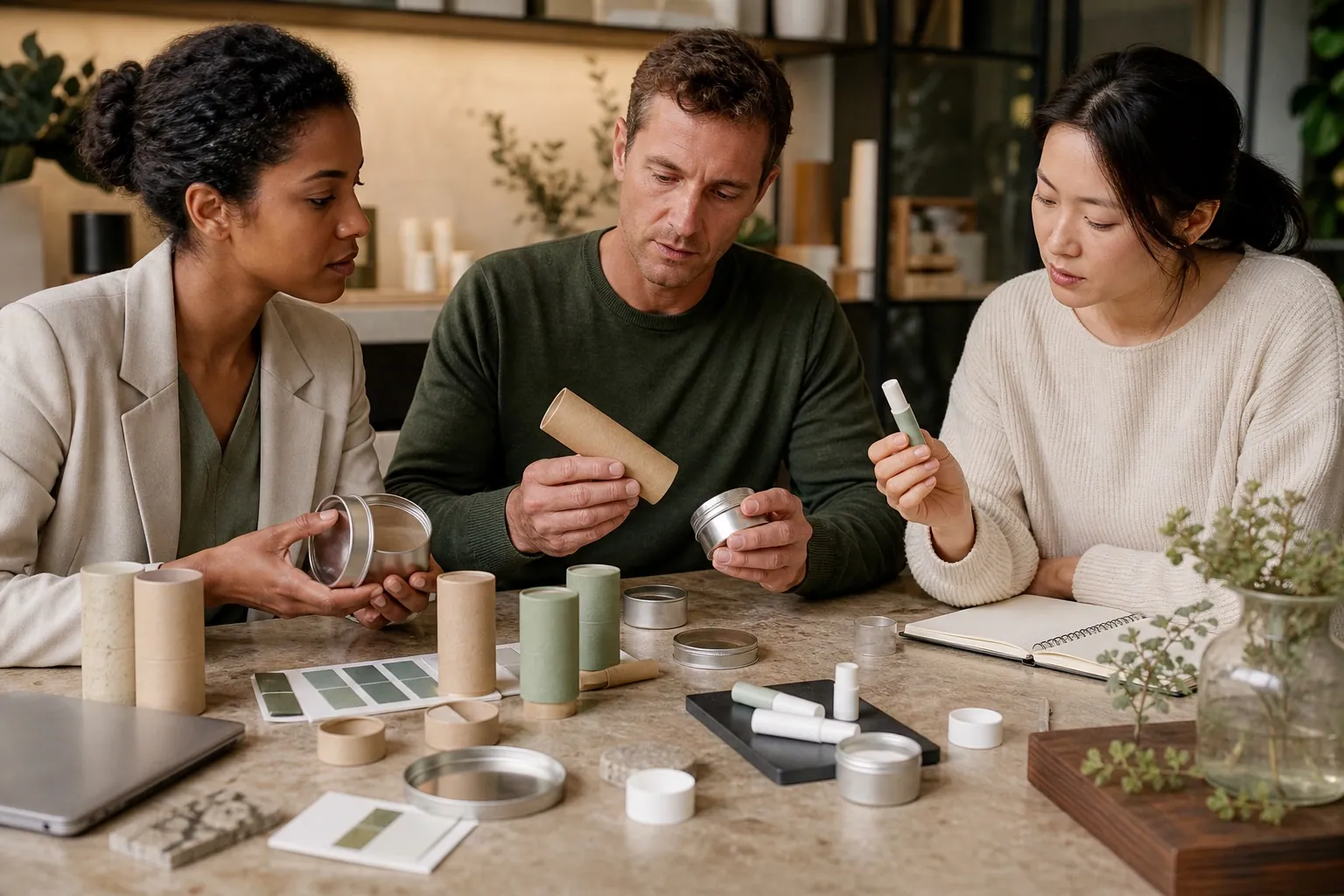
Test a cleansing bar through repeated wet-dry cycles, a balm in warm transit conditions and a powder after realistic opening and dosing. Record appearance, odour, hardness, dispensing, residue, package condition and instructions. The customer should not need insider knowledge to keep the product usable.
Launch a focused range that is easy to learn
For a first line, one solid hero and one familiar supporting format can be easier to explain than an entirely waterless routine. Bring the concept, market, claim boundary, use environment, packaging idea and quantity range to a product development conversation, then let evidence refine the proposition.
07
Design the formula architecture around use conditions
Start with foreseeable exposure
Begin with the conditions the customer will create. A balm in a warm handbag, a bar beside a shower and a powder opened with wet hands face different exposure. Map temperature, humidity, contact, dosing and storage before selecting ingredients. This keeps the formula brief connected to foreseeable use rather than an ideal laboratory environment.
Balance structure with sensory performance
For solid systems, define hardness, melting behaviour, glide, pay-off and residue. Waxes and structuring materials can improve shape while making application draggy or leaving a film. Emollient balance, powders and surfactants influence sensory performance as much as the absence of water. Sample criteria should describe the desired action and after-feel in language the technical team can test.
Engineer powder activation and dose
For powders, assess particle size, flow, dust, clumping and activation. The customer needs a repeatable dose and enough wetting to form the intended texture without losing product into the sink. Ingredients that remain stable while dry may behave differently once activated, so directions and single-use assumptions should match the actual product design.
Control oxidation and physical change
For oils and anhydrous serums, oxidation and solubility can become more important than microbial growth alone. Review ingredient sensitivity, antioxidants, headspace, light exposure and contact materials. A clear oil that clouds in cold transit or changes odour in a partially used bottle has a stability problem even if the formula contains no water.
- Temperature and humidity during use and delivery.
- Dose, contact method and expected storage position.
- Hardness, glide, lather, residue or activation criteria.
- Oxidation, odour and colour acceptance limits.
- Formula and component version used for every test.
08
Control moisture during manufacturing and filling
Map every route by which moisture can enter
A low-water product can still encounter moisture through raw materials, processing air, equipment cleaning, cooling and filling. Define how hygroscopic ingredients are stored and staged, how cleaned equipment is released and how long exposed bulk can remain in the production environment. These controls should match the sensitivity of the actual formula.
Match equipment and controls to the format
Powders and solid bars may need different rooms, extraction, tooling and line-clearance practices from emulsions. Dust can affect operator handling and cross-contamination controls, while warm-fill balms require controlled temperature and cooling. Ask how the manufacturer records critical steps and what in-process checks confirm the batch remains within specification.
Synchronise filling with component readiness
Packaging should be available and released before filling begins. A moisture-sensitive powder should not wait in open bulk because sachets or caps are delayed. Coordinate material arrival, component inspection and production capacity so the formula is not exposed while another part of the project catches up.
Release against format-specific checks
Define finished-product release checks. Weight, appearance, odour, hardness, closure, seal, coding and pack condition may all matter. For a bar, sample across the cooling or curing sequence where relevant; for a stick, check advance and retraction; for a powder, check dose and seal integrity. Product-specific records make repeat production more reliable.
09
Engineer packaging for humidity, dose and portability
Give the pack three measurable jobs
The pack has three jobs: protect the formula, make the correct dose easy and communicate storage. A paper-heavy presentation may support the visual proposition but still need an inner barrier. A metal tin may feel durable but invite wet fingers. A stick can improve contact control while adding mechanism and compatibility questions.
Test with product and realistic handling
Run package tests in the use position. Open and close the pack with damp hands, store it upright and sideways, carry it through temperature change and observe residue around closures. A component that passes an empty drop test may still leak, jam or lose decoration after repeated contact with oils and surfactants.
Make correct storage intuitive
Write storage instructions as part of development. “Keep dry between uses” is only useful if the pack makes drying possible. Powder directions should state dose and activation. Balm instructions should clarify application and heat exposure where appropriate. Clear instructions reduce misuse and provide a better basis for customer-service responses.
Validate the ecommerce configuration
Evaluate the ecommerce system, not only the primary component. Include carton, insert, seal, shipper and protective material in transit checks. If reduced packaging is a goal, test whether the lighter configuration survives the actual distribution route. Replacing damage and reshipping product can undermine both margin and the intended environmental benefit.
10
Build an evidence-led waterless launch plan
Choose one credible customer advantage
Choose one customer tension the format genuinely improves: travel, dose control, reduced primary packaging or a sensorial ritual. Avoid asking “waterless” to carry every benefit at once. A precise proposition is easier to explain, test and substantiate than a broad promise covering sustainability, performance, sensitivity and convenience.
Separate facts from environmental conclusions
Create a claim file that separates formula facts, packaging facts and wider environmental conclusions. Record the product boundary, evidence source, target market and exact wording. Claims such as “concentrated powder activated at use” or “paper outer carton” are narrower than “zero waste” and less likely to imply a life-cycle conclusion the project has not established.
Teach the unfamiliar parts of the ritual
Plan content around education. Demonstrate dose, activation, lather, storage and expected wear rate at normal speed. Show the pack after use, not only when new. Customer questions about melting, crumbling, clumping or residue should be anticipated in directions, FAQs and sampling rather than treated as isolated complaints after launch.
Use post-launch evidence to refine the system
Use the first production run as a learning cycle. Track damage, storage questions, return reasons, usage rate and repeat purchase by format. When the evidence supports the next order, bring the formula version, pack configuration, market, quantity and observed use issues to LUXA so the repeat plan improves the complete system.
- One clearly defined format advantage.
- Finished-formula and packaging evidence.
- Precise claim wording for the target market.
- Normal-use demonstrations and storage guidance.
- Returns, damage and repeat-use review before reorder.
Make the next step useful
Bring the right details to your first product conversation.
Share your product category, target market, packaging direction, expected quantity and timing. Luxa can help turn those inputs into a more practical development route.
Discuss your product brief