Luxa journal · manufacturing guide
Foundation Shade Range Planning: Depth, Undertone and Concealer
Build a foundation shade range that covers depth and undertone. Learn how to assess dry-down, pair concealers and plan quantities by shade.
In this guide
A foundation range can offer dozens of shades and still leave customers without a match. What matters is where those shades sit across depth and undertone, how they look after drying and whether customers can find the right one. Planning the range means testing those details on real skin while keeping shade quantities, concealer pairings and reorders manageable.
Every product is shaped by its formula, claims, packaging, target market and sales channel. Use this guide to prepare a sharper manufacturing conversation, then confirm technical, legal and regulatory requirements for your specific launch.
At a glance
Guide essentials
Map
Depth and undertone separately
Observe
Application, dry-down and wear
Validate
On intended customers’ skin tones
Stock
Using shade-level assumptions
01
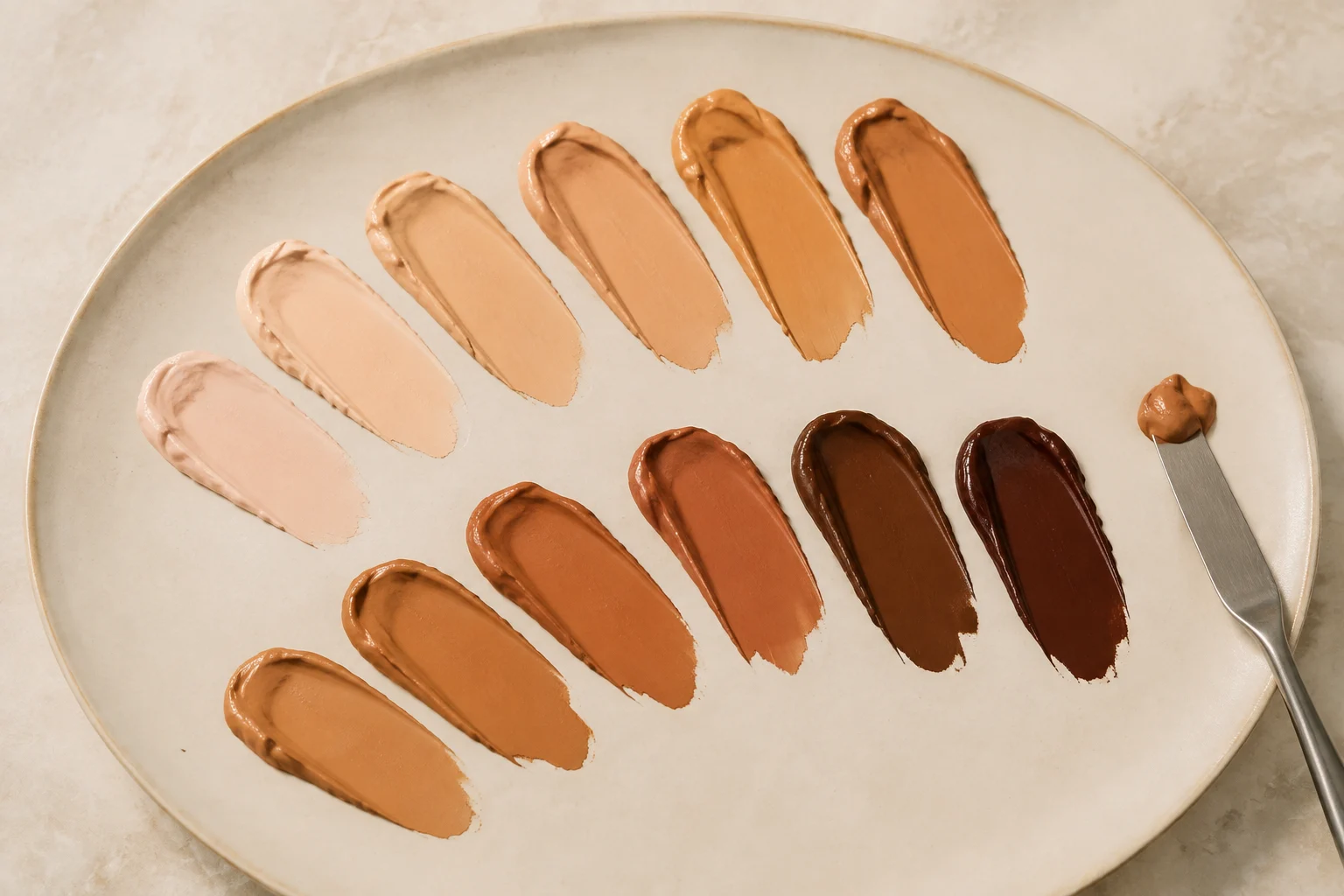
Finding the gaps in your shade range
Start with the people you want to serve. Shade-match feedback, return reasons, customer interviews and retailer comments can reveal what their current foundations get wrong. Adding several similar medium shades will not solve a shortage of deeper or lighter options.
Map depth on one axis and undertone on the other. This makes gaps easier to spot, though real skin tones will not fit neatly into every box. Mark the combinations that need more customer feedback or sample work before choosing the final assortment.
Coverage matters too. A sheer foundation and an opaque formula can look quite different in the same nominal shade. Decide on the coverage and finish early so you are comparing samples against the right expectations.
| Field | What to record | Why it matters |
|---|---|---|
| Depth | Relative lightness or darkness in the range | Makes spacing and coverage gaps visible |
| Undertone | Agreed warm, cool, neutral or other directional description | Avoids relying on shade number alone |
| Coverage | Appearance at a controlled application amount | Keeps comparisons meaningful |
| Dry-down | Observed appearance at agreed checkpoints | Prevents approval from a wet swatch only |
| Evidence | Sample code and anonymised panel observations | Connects changes to a reproducible reference |
02
Making undertone names useful
Depth describes how light or dark a shade appears. Undertone describes its colour character. “Warm”, “cool” and “neutral” can mean different things across brands, so define your terms and show customers what they mean with accurate swatches.
Compare samples under consistent lighting and involve people across the skin tones you plan to serve. Ask how they would describe the match. A phone photograph is useful as a record, but exposure and white balance can change the apparent colour.
If several testers call a shade too pink, yellow, orange or grey, investigate it instead of relying on its “neutral” label. Keep technical shade codes separate from marketing names so a rename does not break the sample history.
03
Checking colour after dry-down
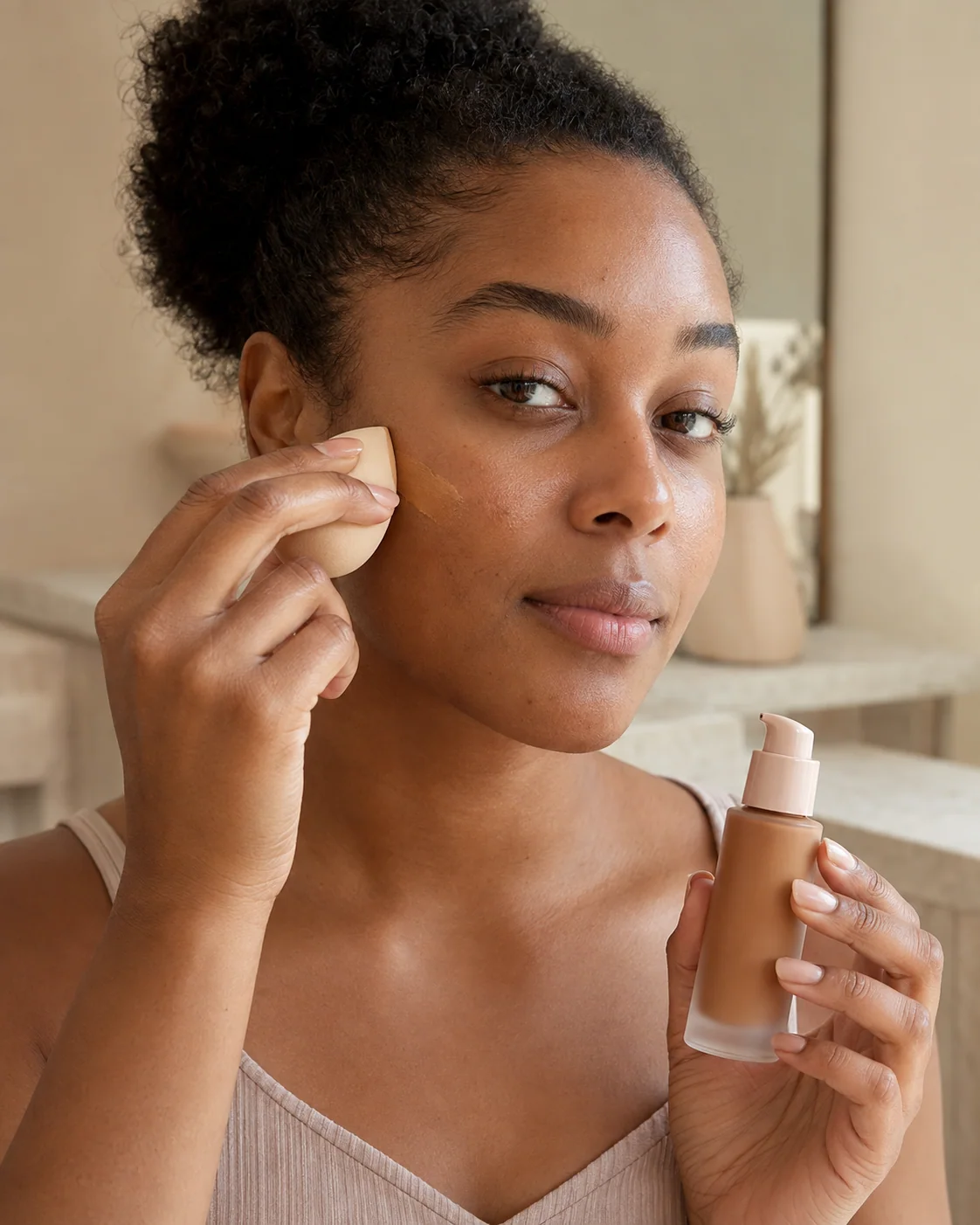
Apply a consistent amount and check the colour straight away, after an agreed settling period and later during wear. Record skin preparation, the tool used and anything worn underneath. Otherwise, differences in application can be mistaken for differences in the formula.
Not every colour change is oxidation. A visual check can show that a foundation looks darker or warmer; it cannot establish the chemical cause. Describe what changed and ask the formulation team to investigate.
Recheck revised shades against their approved references. If a correction affects other shades, those need review too. Keeping a physical standard and the feedback behind each revision helps make future batches consistent.
04
Matching foundation with concealer
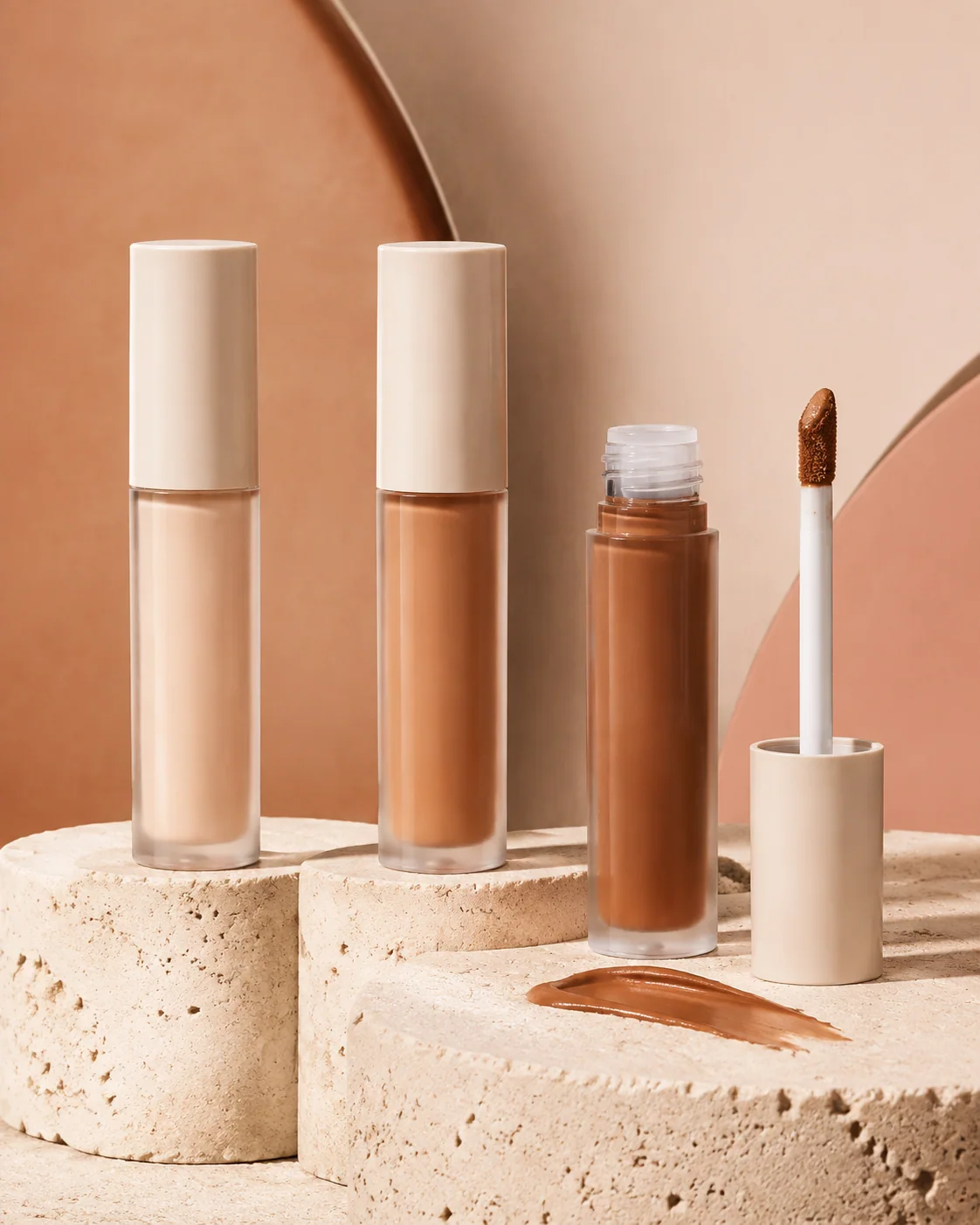
Spot concealing and under-eye brightening are different jobs. A lighter shade may create the desired brightening effect but stand out when used to cover a small area elsewhere. Do not make every concealer a lighter version of its foundation partner by default.
Test concealer over the foundation it will be paired with. Look at the blended edge, the coverage and the finish after a second layer. Note which pairings aim for a close match and which deliberately brighten.
Make that distinction clear in shade charts. Show a matching concealer and, where appropriate, a separate brightening option. Check those pairings with real samples before publishing recommendations, and allow for individual differences.
05
Testing the formula in its final pack
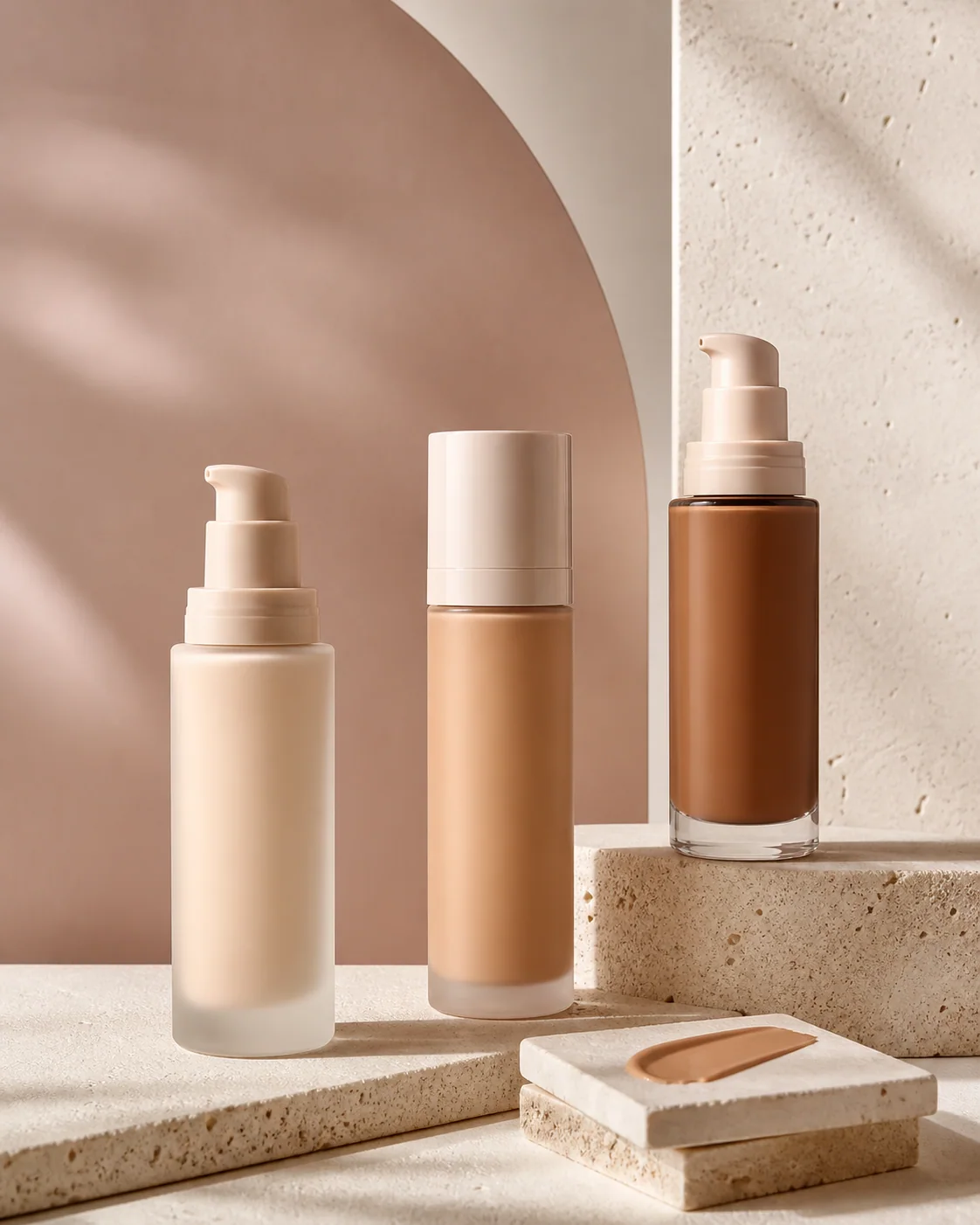
An inconsistent pump can change how much coverage a customer gets. Test foundation packaging filled with the final formula: check priming, dose, mess around the opening and ease of application with the recommended tool.
For a US launch, FDA guidance on cosmetic testing requires appropriate support for product safety. A shade panel answers questions about appearance and use, not the full safety assessment.
Plan testing during formula development, not after the carton is designed. Ask technical and regulatory reviewers which records are needed for the shades, market and proposed claims. Keep wear-time and skin-benefit promises out of final copy until the evidence is ready.
06
Ordering the right quantity of each shade
Equal quantities across every shade are convenient to order, but they may not match demand. Use customer responses, channel information and any relevant sales history to estimate quantities by shade. For a first launch, make the uncertainty explicit and ask how quickly individual shades can be reordered.
Separate formula minimums from bottle, decoration and carton minimums. Shared packaging can simplify a range, but a wider shade selection still ties up more stock. If the budget cannot support the coverage you want, reconsider the launch size or timing before claiming the range suits everyone.
For custom foundation development, bring a shade matrix, finish reference and proposed sample plan. Include your quantities and open questions when you discuss the range with LUXA, especially where customer testing has exposed a difficult match.
Make the next step useful
Bring the right details to your first product conversation.
Share your product category, target market, packaging direction, expected quantity and timing. Luxa can help turn those inputs into a more practical development route.
Discuss your product brief