Luxa journal · manufacturing guide
Matte vs Satin Lipstick: Plan Formula, Shades and Packaging
Compare matte and satin lipstick for your beauty brand, from colour and comfort to shade selection, bullet performance and packaging.
In this guide
Matte or satin? The finish is an easy place to start, but customers also notice how a lipstick glides, whether the colour builds evenly and how it feels after lunch. A successful lipstick needs to get those everyday details right. For a brand developing its first range, the job is to choose a finish customers want and make sure the formula, shades and case deliver it consistently.
Every product is shaped by its formula, claims, packaging, target market and sales channel. Use this guide to prepare a sharper manufacturing conversation, then confirm technical, legal and regulatory requirements for your specific launch.
At a glance
Guide essentials
Finish
Low sheen or a soft reflective look
Sample
Colour, glide and wear separately
Component
Bullet, cup, mechanism and cap
Range
A distinct role for every shade
01
What matte and satin really tell you
Matte lipstick has a low-sheen finish; satin has a soft reflection without looking as glossy as a lip gloss. Those descriptions say little about comfort or wear. A soft matte can glide easily, and a satin can give strong colour in one pass. Neither finish guarantees how much the lipstick will transfer.
For private label lipstick, specify the result you want after one pass and after layering. Do you want a blurred wash of colour or an opaque finish? Reference photographs help, but account for the lighting, liner and number of layers used to create the look.
This article focuses on moulded bullet lipstick. Liquid lipstick needs a different applicator and packaging brief, even when you want a similar finish.
| Review area | Matte direction | Satin direction |
|---|---|---|
| Surface | Low sheen, soft-focus or a defined flat finish | Soft reflection without a gloss-like coating |
| Application | Check drag, evenness and buildability | Check slip, edge control and layering |
| Wear | Review patchiness, comfort and transfer | Review movement, fading and reapplication |
| Do not assume | Matte automatically means transfer-proof | Satin automatically means sheer or short-wearing |
02
Deciding what the formula should do best
Choose what matters most before comparing samples. An everyday lipstick might put easy application and comfort first. A statement red might prioritise strong colour and a clean edge. Both can be matte, but they ask different things of the formula.
A favourite oil, wax or butter is not a substitute for that description. Ask how the finished lipstick performs, then discuss ingredients with the formulator. It is easier to judge a sample against a clear reference than against a list of ingredients you hope will produce the right feel.
Keep sample feedback specific. Does the bullet drag on first contact? Does colour collect at the edges? Can the lipstick be reapplied without removing the previous layer? These observations are more helpful than asking for a “more premium” texture.
03
Choosing shades customers can tell apart
Give customers a reason to choose each shade. That might mean a daily neutral, a deeper alternative or a signature red. Check that neighbouring colours still look different on the lips: natural lip pigmentation can make two distinct-looking bullets wear surprisingly alike.
Approve colours against physical samples under consistent lighting. Screens and camera settings can shift the result. Keep a coded master sample for every approved shade, and agree how it will be replaced if it ages or becomes damaged.
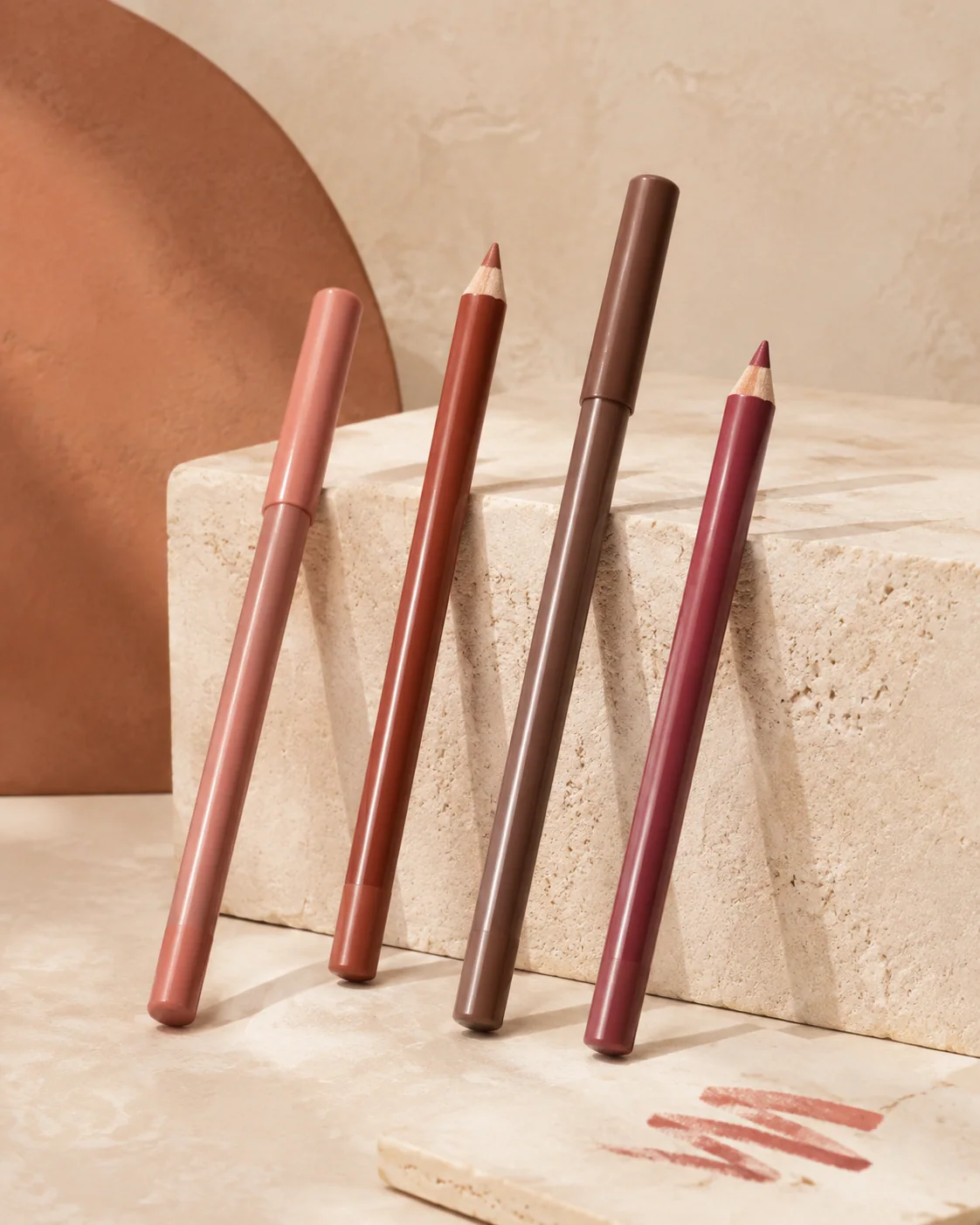
A coordinating lip liner can sharpen the edge or add depth. It does not have to match exactly, but test the pair together. The lipstick should apply evenly over the liner without dragging or leaving an obvious, unintended border.
- A customer or use occasion for every proposed shade.
- Visible differences across the intended skin and lip tones.
- A coded physical standard for shade approval.
- A separate quantity and forecast for each shade.
- Consistent shade names across cases, cartons and product pages.
04
Checking the bullet and case
Twist the bullet up and down, apply it, then put the cap back on. Does it rub against the case? Does it feel loose in the cup? Does it retract fully? These simple checks can reveal problems that a colour swatch will never show.
The filled lipstick also needs appropriate physical, stability and compatibility testing. Ask the technical team which storage and transport conditions it will assess. A hand-applied lab sample cannot show how the final moulded bullet will hold up in its case.
Settle lipstick packaging before final approval. Changing the cup or mechanism can affect the fit; changing decoration can affect the order quantity or delivery date. Keep the exact component codes with the approved formula and shades.
05
What needs evidence before launch
For US distribution, FDA guidance on colour additives requires lip-use permission; general external-use permission is not enough. Review the colourants in the proposed shades before artwork is approved.
A comfortable sample is not proof of safety. FDA cosmetic testing guidance places responsibility for safety on firms marketing cosmetics. Qualified reviewers should assess what evidence the finished formula and claims need.
Keep “transfer-proof” and specific wear-time claims provisional until the results support them. Shelf life needs its own evidence from stability testing, including the final formula and pack.
06
Costing the full lipstick range
Cost each shade as well as the collection. Formula batches, bullets, cases, decoration and cartons can have different minimums. A low unit price is less attractive if it leaves you holding too much stock in a slow-selling colour.
OEM manufacturing may suit an existing formula or a well-defined specification. ODM development may suit a new texture or colour concept. Ask how many sample rounds are included and what a late shade or component change would cost.
Keep one approved record of the formula codes, shade samples, components and artwork. When you request a lipstick quote, include quantities per shade and the case you want. That makes the cost of the whole collection easier to compare.
Make the next step useful
Bring the right details to your first product conversation.
Share your product category, target market, packaging direction, expected quantity and timing. Luxa can help turn those inputs into a more practical development route.
Discuss your product brief